

The Birmingham School of Art emerged as one of Britain’s most influential centres of creative education, bringing together fine craftsmanship, industrial design, and the ethos of the Arts and Crafts movement. It all began in a few rented rooms at a time when rapid industrialisation was transforming manufacturing and threatening traditional craft practices. Over time, the institution grew into the leading creative powerhouse outside London, reshaping modern design and applied artistic professions. In this article on birmingham1.one, we look at how the Birmingham School of Art was founded, the renowned figures who shaped it, its pioneering educational revolution, and how its enduring legacy continues to inspire today’s creative industries.
Founding the Birmingham School of Art: From Rented Rooms to Margaret Street
The history of the Birmingham School of Art began in 1843 in rented rooms on New Street. Originally established as the Government School of Design, it was founded by the Royal Birmingham Society of Artists with financial backing from the Council of the Government School of Design. Though modest at its inception, public demand for training in art and design expanded rapidly.
Under the headship of Thomas Clark (1846–1851) and subsequently George Wallis (1851–1858), student enrolment grew substantially. The original rented rooms could no longer accommodate this influx, prompting a move to the newly built Birmingham and Midland Institute on Paradise Street. While this was a major milestone, the school’s most transformative chapter was still to come.
A decisive turning point came in 1877 under headmaster Edward R. Taylor. He successfully arranged for the Birmingham Town Council to take control of the institution. This move granted the school vital autonomy from central government oversight, making it the first municipal college of art in the United Kingdom.
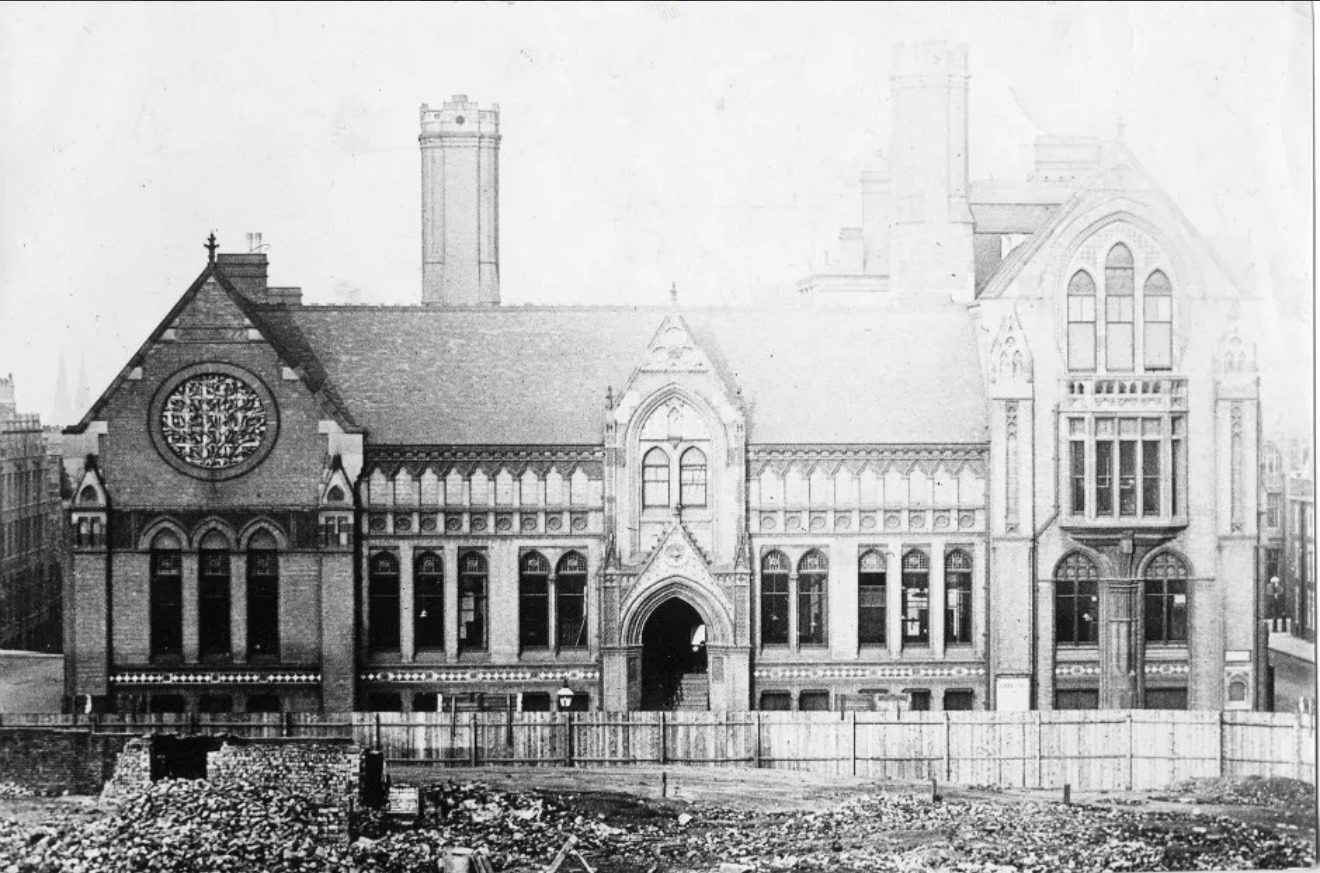
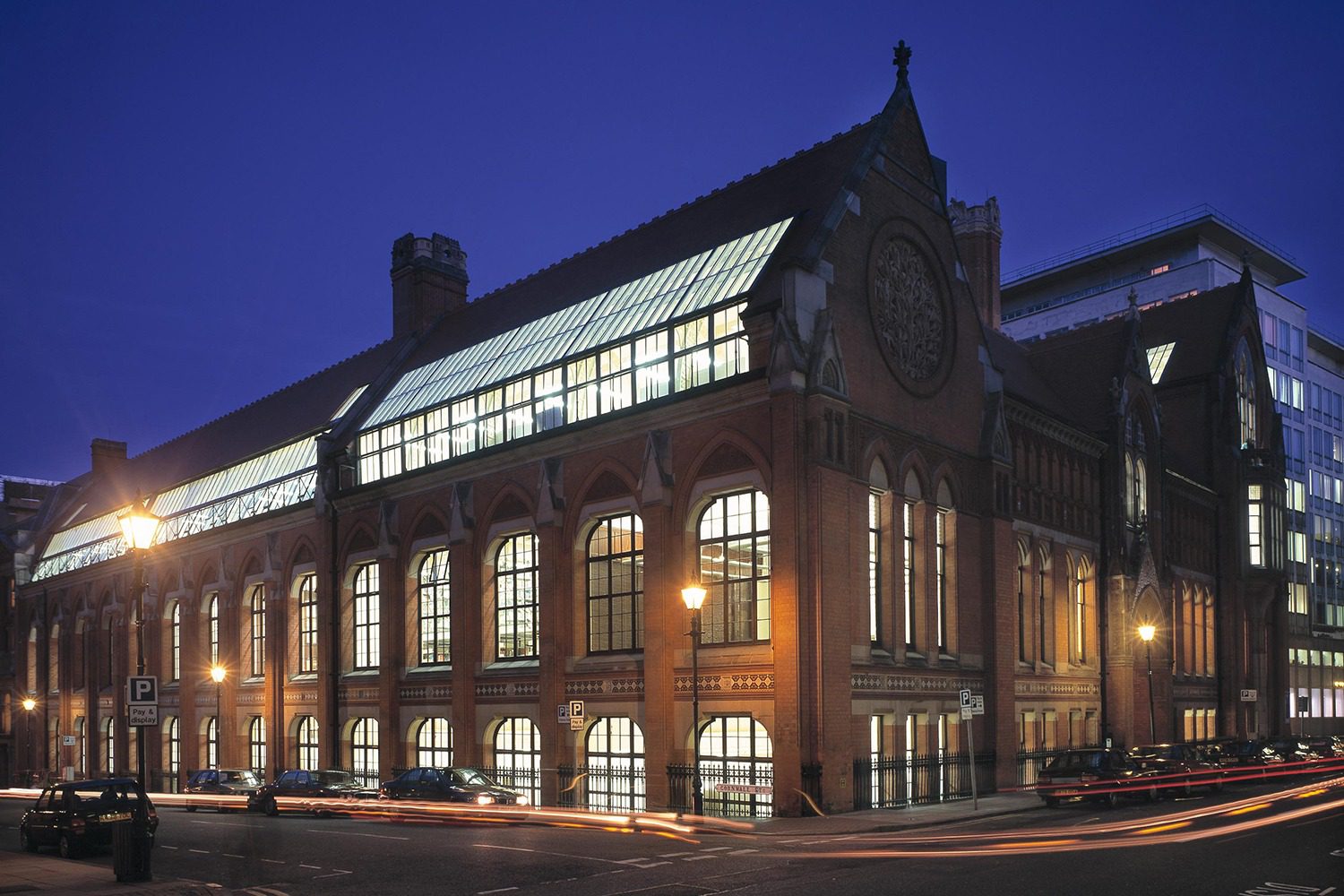
Municipal status cleared the way for a dedicated, purpose-built facility. Generously funded by philanthropists Sir Richard and George Tangye, the project was entrusted to architect J. H. Chamberlain. He created a monumental building on Margaret Street, characterised by Victorian Gothic detailing and striking red brickwork.
In this way, the school grew from modest design classes into a major civic institution. Its journey reflected wider changes across 19th-century Birmingham, where rapid industrial expansion went hand in hand with a growing commitment to design quality, arts education, and urban improvement.
Bridging Design and Craft: An Educational Revolution in Birmingham
In its early decades, the Birmingham School of Art adhered to a narrow, utilitarian curriculum. Tasked primarily with training pattern draughtsmen for local manufacturers, the institution barred life drawing and the study of the human figure. Students were limited to drafting decorative motifs and patterns suited for factory production.
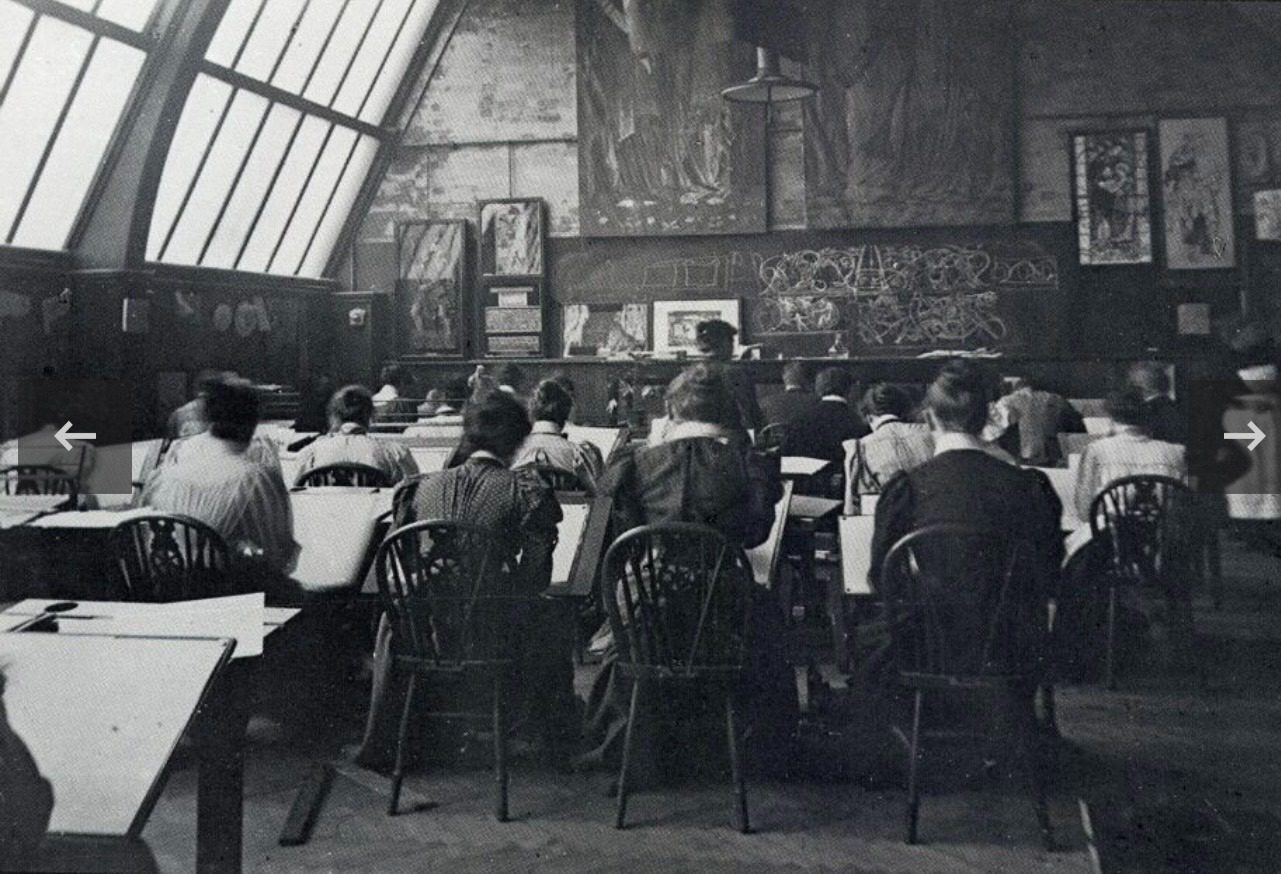
This approach soon sparked discontent. Proponents of the Arts and Crafts movement criticised design detached from the realities of making. They argued that art education had to respect material qualities, craft techniques, and practical utility. It was not enough to draft elegant shapes on paper; designers had to understand how forms behave in metal, wood, glass, or cloth.
In 1884, drawing on recommendations from William Morris, a Royal Commission urged art schools to integrate design theory with the study of raw materials. The Birmingham School became the first in Britain to implement this principle, blending creative design directly with hands-on workshop practice.
The curriculum quickly broadened into diverse applied disciplines, including metalwork, jewellery making, enamelling, and book illustration. For the Birmingham School of Art, this reform meant abandoning sterile academic exercises. Students were taught not only to draft aesthetically pleasing concepts, but also to understand materials, fabrication techniques, and functional purpose. This union of fine art and hands-on craft became the school’s defining hallmark.
The Birmingham Group: Artists and Makers of the Arts and Crafts Movement
By the 1880s, the Birmingham School of Art had developed into a leading regional hub of the Arts and Crafts movement in the UK. A close-knit collective of painters, designers, and artisans formed around the institution, eventually recognised as the Birmingham Group (or the Birmingham School).
This circle brought together artists who sought to break down the barrier between fine art and decorative craftsmanship. Their work connected late Pre-Raphaelite traditions with Symbolist ideas. Deeply inspired by John Ruskin, William Morris, and Edward Burne-Jones, they championed manual skill, artistic integrity, and the maker’s personal responsibility for the quality of their work.
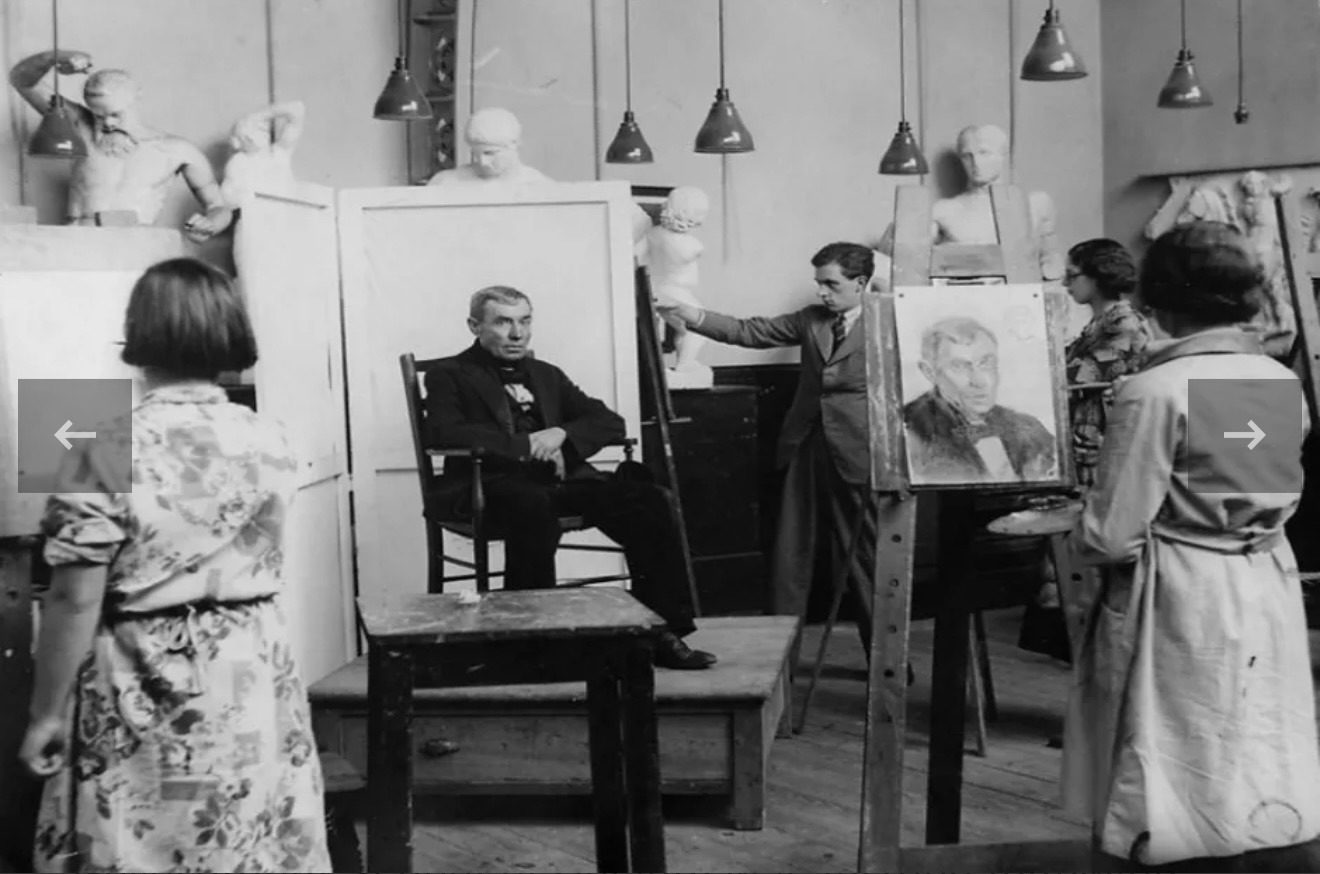
Members of the group looked beyond academic teaching. They collaborated closely with local workshops and guilds, notably the Birmingham Guild of Handicraft and Ruskin Pottery. Through these partnerships, creative ideas moved beyond lecture rooms and into everyday life, enriching domestic wares, decorative items, and architectural interiors.
Graduates specialising in metalwork and applied design stood out in particular. They demonstrated that a major manufacturing hub could foster fine craftsmanship alongside industrial mass production. Their work was characterised by precision, structural harmony, and an effortless balance between utility and visual elegance.
The legacy of the Birmingham Group was central to a late-19th-century shift in how society viewed decorative art and design. Its members helped establish the conviction that art should not be confined to galleries: it belongs in architecture, home interiors, and everyday objects. These ideas left an indelible mark on Birmingham’s cultural history.
The Birmingham School of Illustration: Female Trailblazers and the Book Arts
In the late 19th century, the Birmingham School of Art gained widespread recognition for book illustration and graphic design. Throughout the 1870s and 1880s, local businesses sought out its graduates to stay competitive on international markets. Under Edward R. Taylor, art education avoided narrow specialisation, encouraging students to master multiple disciplines and combine them seamlessly in practice.
Arthur Gaskin was a prime example of this versatile environment. A gifted painter, illustrator, book designer, and jeweller, his multidisciplinary career matched the school’s vision of training versatile artists capable of working across diverse materials, formats, and branches of visual art.
Other leading illustrators associated with Birmingham included Bernard Sleigh—influenced by Dante Gabriel Rossetti and Edward Burne-Jones—as well as Fred Mason and Charles March Gere. Gere produced the celebrated frontispiece for William Morris’s *News from Nowhere*, printed by the Kelmscott Press. This work cemented the link between Birmingham’s creative circle and the broader revival of fine printing and typography.
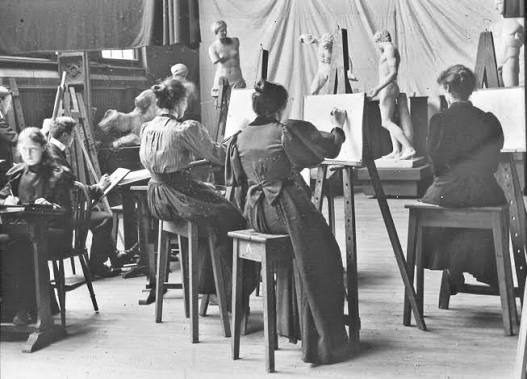
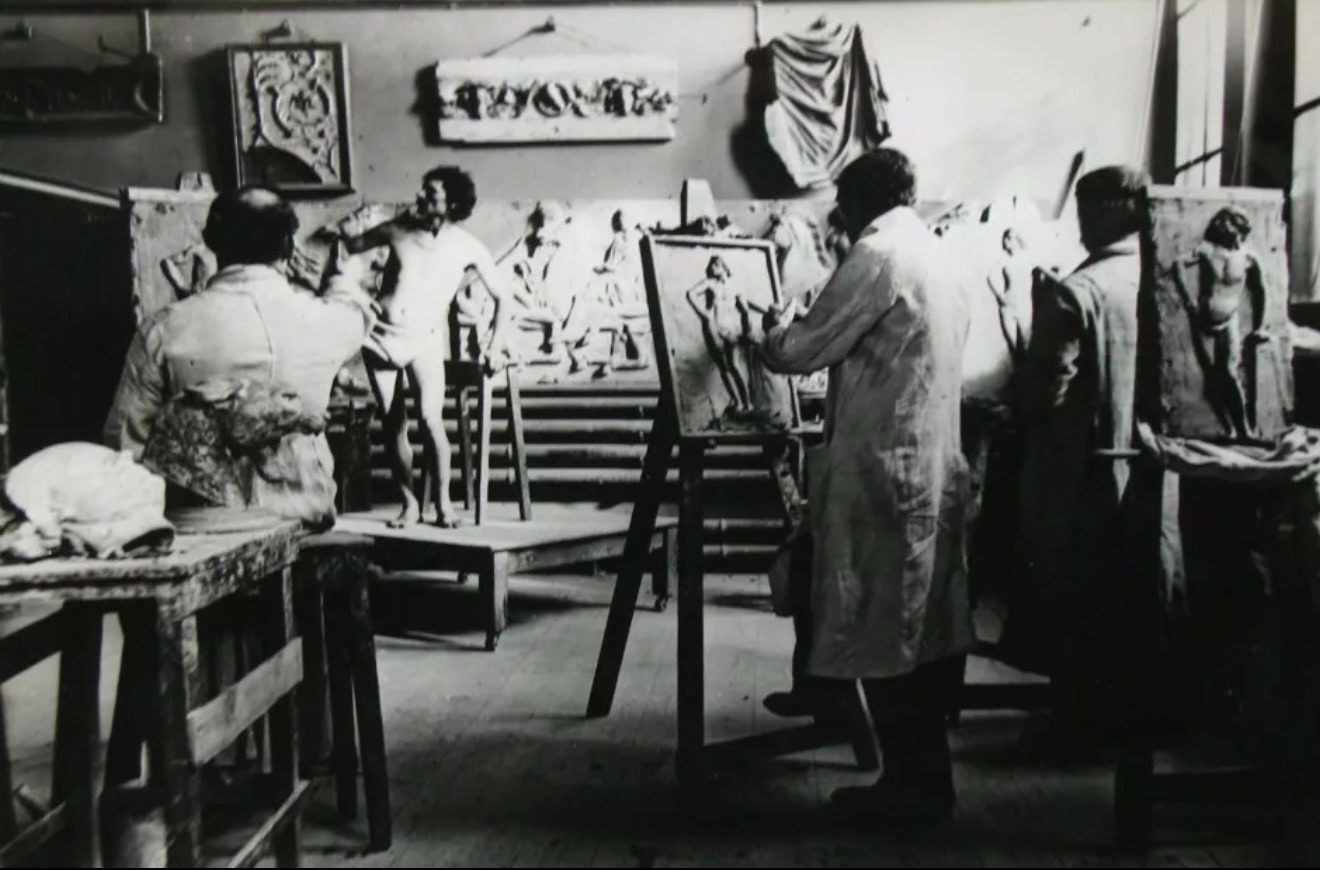
Another defining feature of the school was the active role played by women. At a time when Victorian art guilds and professional bodies were dominated by men, Birmingham offered women genuine avenues to flourish as professional artists and illustrators. Notable figures included Celia Levetus, Florence Rudland, Georgie Gaskin, and Mary Newill.
Their contributions were an integral part of the school’s achievements. Working alongside male colleagues, these artists produced illustrations, embroideries, and decorative works that helped shape the city’s visual identity. This progressive environment set the Birmingham School apart from many contemporary institutions where women faced strict limitations.
The Institution’s Evolution: From Art School to Birmingham City University
As industry evolved, the school steadily expanded its footprint. In 1888, it incorporated the Birmingham School of Jewellery, which opened a dedicated branch on Vittoria Street in 1890. In 1909, the college launched a School of Architecture, earning formal recognition from the Royal Institute of British Architects (RIBA) in 1923 and 1930.
By the 1960s, the institution had outgrown its Margaret Street premises and expanded onto the Aston University campus. Its subsequent transformation unfolded across several key stages:
- 1971: The school merged into the newly established City of Birmingham Polytechnic, becoming its Faculty of Art and Design.
- 1988: The faculty absorbed the Bournville School of Art, creating the Birmingham Institute of Art and Design (BIAD).
- 1992: The polytechnic attained university status as the University of Central England (UCE).
- 2007: The university was officially renamed Birmingham City University (BCU).
The historic Margaret Street building, now protected as a Grade I listed architectural landmark, remains the home of the university’s School of Art.
The Birmingham School of Art travelled an extraordinary path: from government draughting classes to an innovative centre that redefined the designer’s role in society. By championing hands-on material practice and craft traditions, it nurtured generations of talent who shaped the visual world of the Arts and Crafts movement and built the foundations of modern British creative industries.