

Some of the most striking and elegant shop windows created by British grocery chains in the late nineteenth and early twentieth centuries belonged to the Maypole Dairy Co. These windows are very recognisable and worthy of attention. However, it should be noted that Maypole Dairy Co. is known not only for its display cases, but also for its products, which it has been producing for decades. For more information about the history of the Birmingham dairy company, please visit birmingham1.one.
Company history
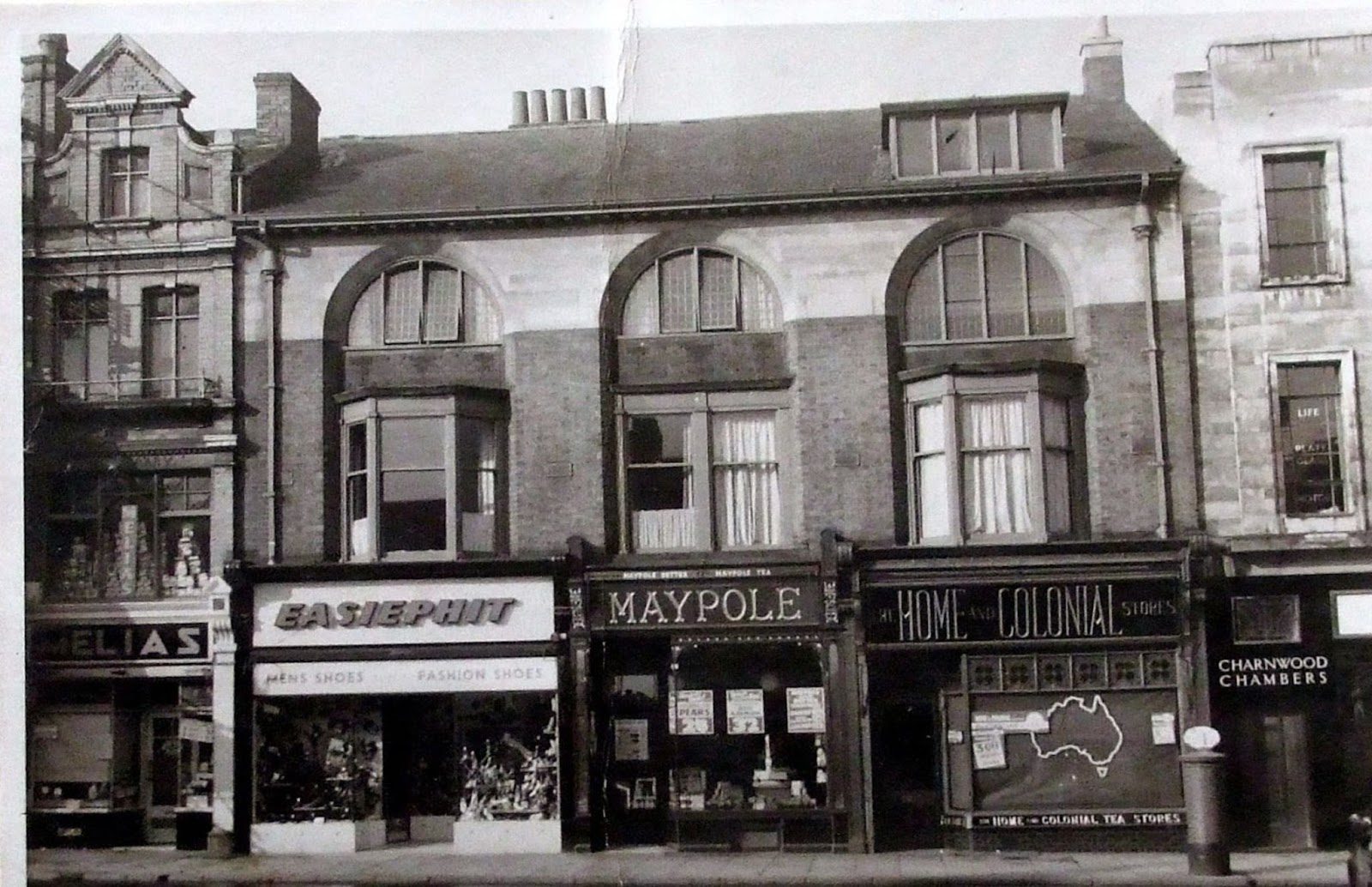
The Maypole Dairy chain of dairy stores is nothing more than a classic family business, a family affair. From the very beginning, the company has specialised in what can be made from milk. We are talking about butter and other dairy products, and, importantly, the company worked hard to produce margarine, although at the time it was considered an inferior product for the lower classes. By the way, margarine was supposed to be called butter, but a lawsuit prevented this in 1887.
If we go back to the history of the company, in 1839, James Watson, a member of parliament from Shrewsbury, founded a business in Birmingham that produced butter and other dairy products. Twenty years later, this company was acquired by George Jackson. This happened in 1859. He started producing and selling various dairy products, paying particular attention to butter.
At the same time, the three Watson brothers decided to learn from Jackson, learning the basics of the dairy business. So when margarine was introduced, the Watson’s didn’t hesitate to leave George Jackson’s business and set up their own, wanting to specialise in this product. In 1887, the brothers set up their first store in Wolverhampton, naming it Maypole Dairy. The store focused on selling both margarine and butter, as well as other dairy products.
Simultaneously with the opening of the Wolverhampton store, one of the Watson brothers, Charles, opened a Danish dairy farm and in 1889 settled in Manchester, establishing the headquarters of Maypole Dairy. Strangely enough, the brothers George, Charles, and Alfred Watson later rejoined George Jackson again.
From now on, the newly formed company specialised in both butter and margarine, and also sold eggs, tea and condensed milk. At the same time, the partners had a gentlemanly agreement not to compete with each other and tried to stick to it. Their stores were always located in different places – Charles concentrated on the north of Britain, Alfred in the Midlands, and Jackson in the south and east.
Margarine profits
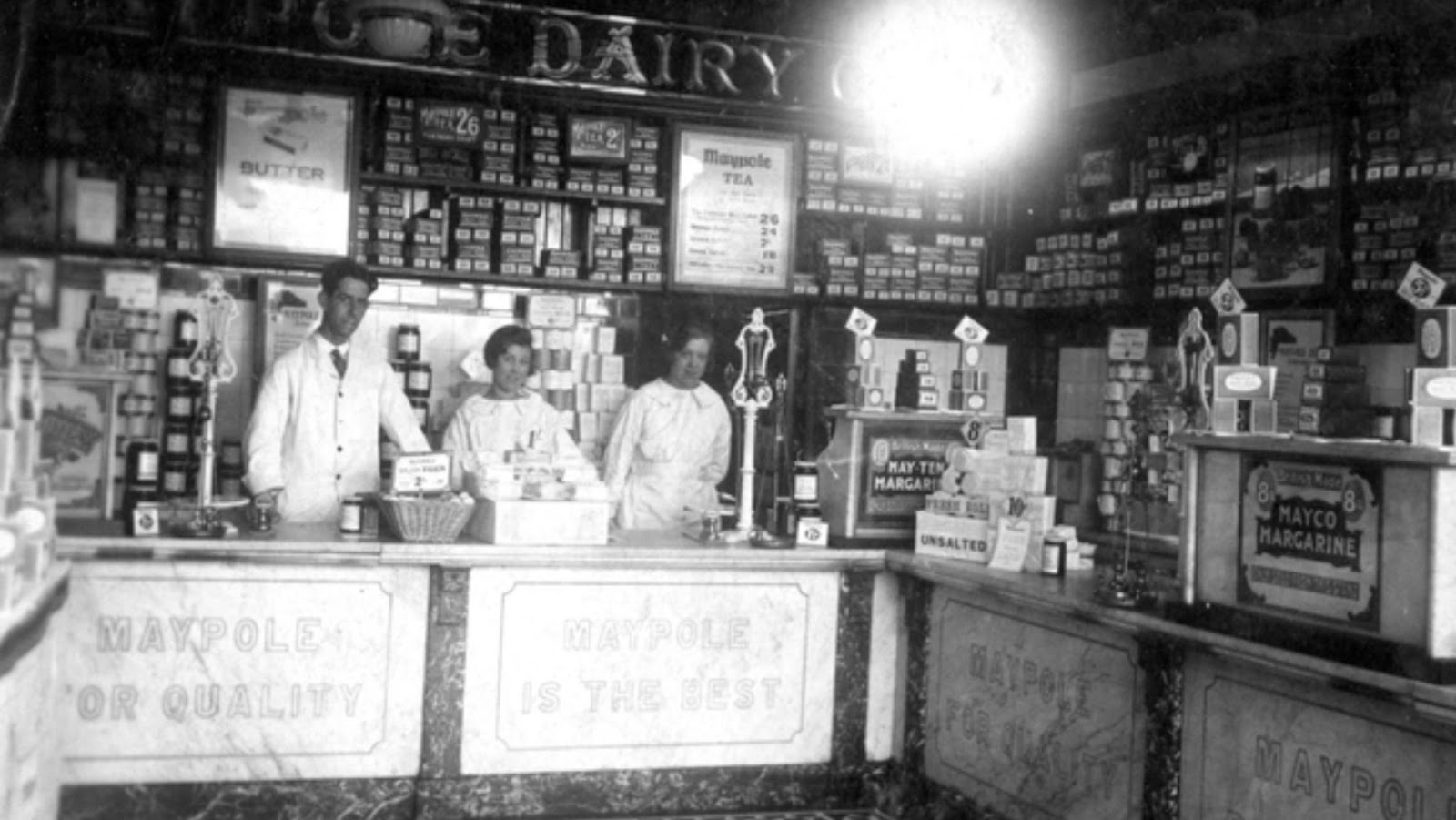
In 1912, after more than a decade of productive work, the company reported a net profit of over £550,000, most of which was distributed to shareholders, as a profit-sharing scheme had been introduced in 1890. By 1918, there were a surprisingly large number of Maypole branded stores across the country, with nearly 900 branches.
Despite this large number of stores, the company’s reliance on fats from abroad to produce margarine in England and Ireland proved problematic, especially during the war years. At the same time, in 1915, the brothers and a partner opened a large factory in South all, which was named Maypole Margarine Works, in 1915. The factory employed about 6 to 50 people. The Maypole Margarine Works became the largest margarine factory in the world, and by 1918 Maypole controlled about 50% of the British market.
Interestingly, at the same time as Maypole’s competitors were importing finished products from abroad, namely from the Netherlands, Maypole, in turn, used the slogan “buy British” to ensure its own survival. For a while, this was a good idea and paid off handsomely. Especially during the First World War, which lasted for several years afterwards.
The kings of the margarine industry
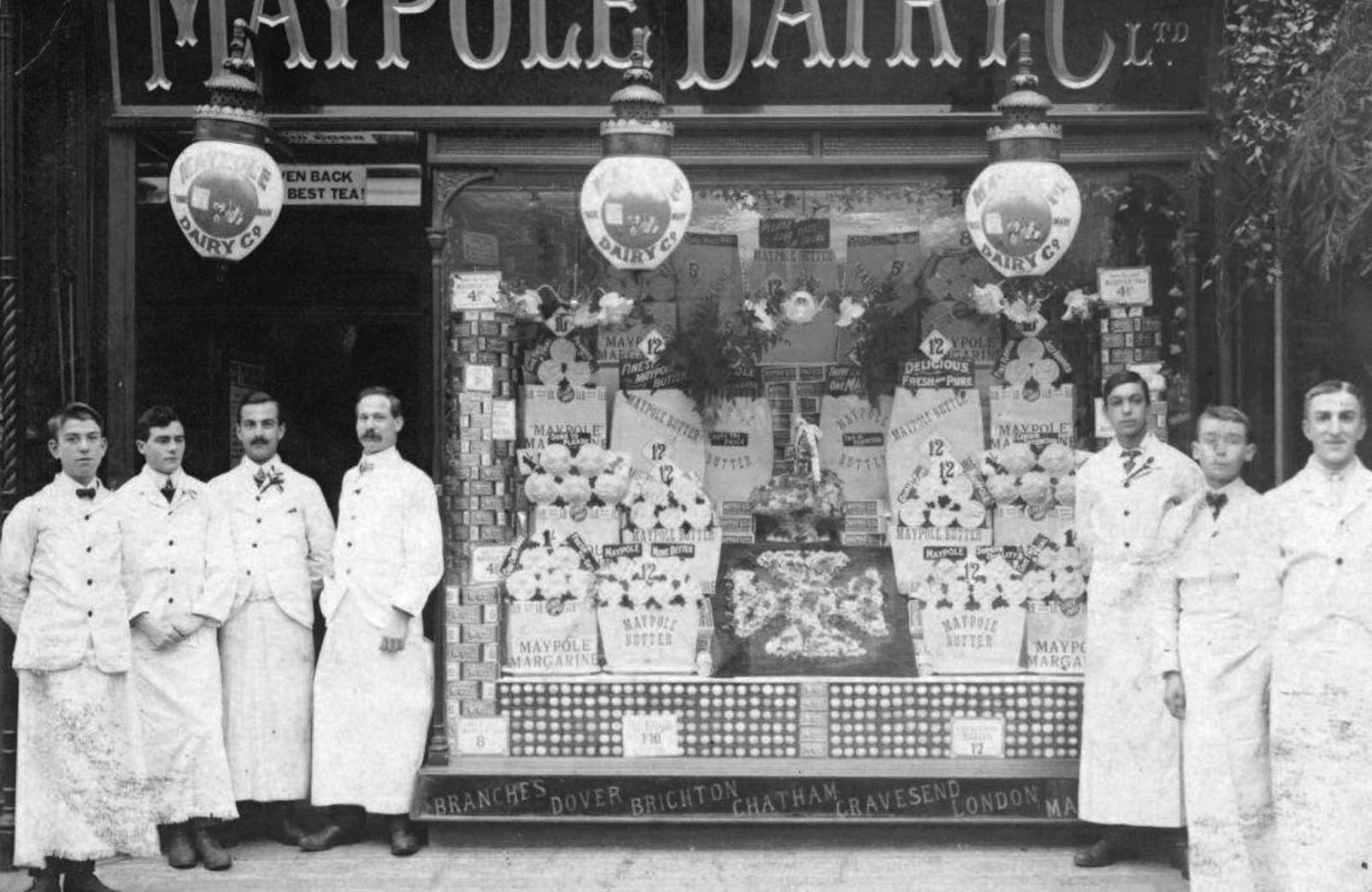
At that time, there was a struggle in the UK for who would become the king of the margarine industry. The battle was between Maypole and two Dutch firms, Jürgen, and van den Bergh’s. Or more precisely, Home and Colonial, whose supplier was Jürgen, and Lipton, whose supplier was Van den Bergh, who started Blue Band. These companies became Maypole’s main competitors in the margarine trade. A price war unfolded between them.
To put the situation in perspective, Maypole Dairy Co’s turnover in 1921 exceeded £36 million, and its net profit was 3%, equivalent to £1.1 million. The success was largely due to the growing popularity of margarine and Maypole’s insistence on high quality, despite the fact that all products were mass-produced. Under these conditions, the Watson’s managed to supply a third of the British market with margarine. Interestingly, cheese as a commodity was rejected at the earliest stage. The main trade was carried out in five products – eggs, tea, condensed milk, butter, and margarine.
But despite these seemingly fantastic figures, profits slowly began to fall. In the 1920s, the margarine bubble began to deflate, and it became clear that it was cheaper to import foreign margarine than to produce it. There was an attempt by Maypole to invest in peanut oil from Africa, but it failed. Profits continued to fall.
By 1924, Maypole had given up, and ownership of the share capital was transferred from the Watson family to Home and Colonial Stores. However, the chain continued to trade under the same name and began to diversify its products. After many years of trading, in 1964 Pearks, Maypole, Home and Colonial, and Lipton’s, all trading as branches of Allied Suppliers, merged to share a common headquarters in London. Most of the group’s functions were centralised, ending the separate management structures of each company.
But all this will happen later, for now, in 1924 Maypole became part of the Home and Colonial group, but continued to expand. By 1928, the company had more than a thousand stores, and the brothers opened their thousandth branch in 1926. In addition, the range of products was expanded. The usual dairy products, led by butter and margarine, were joined by jam and biscuits.
The Great Depression
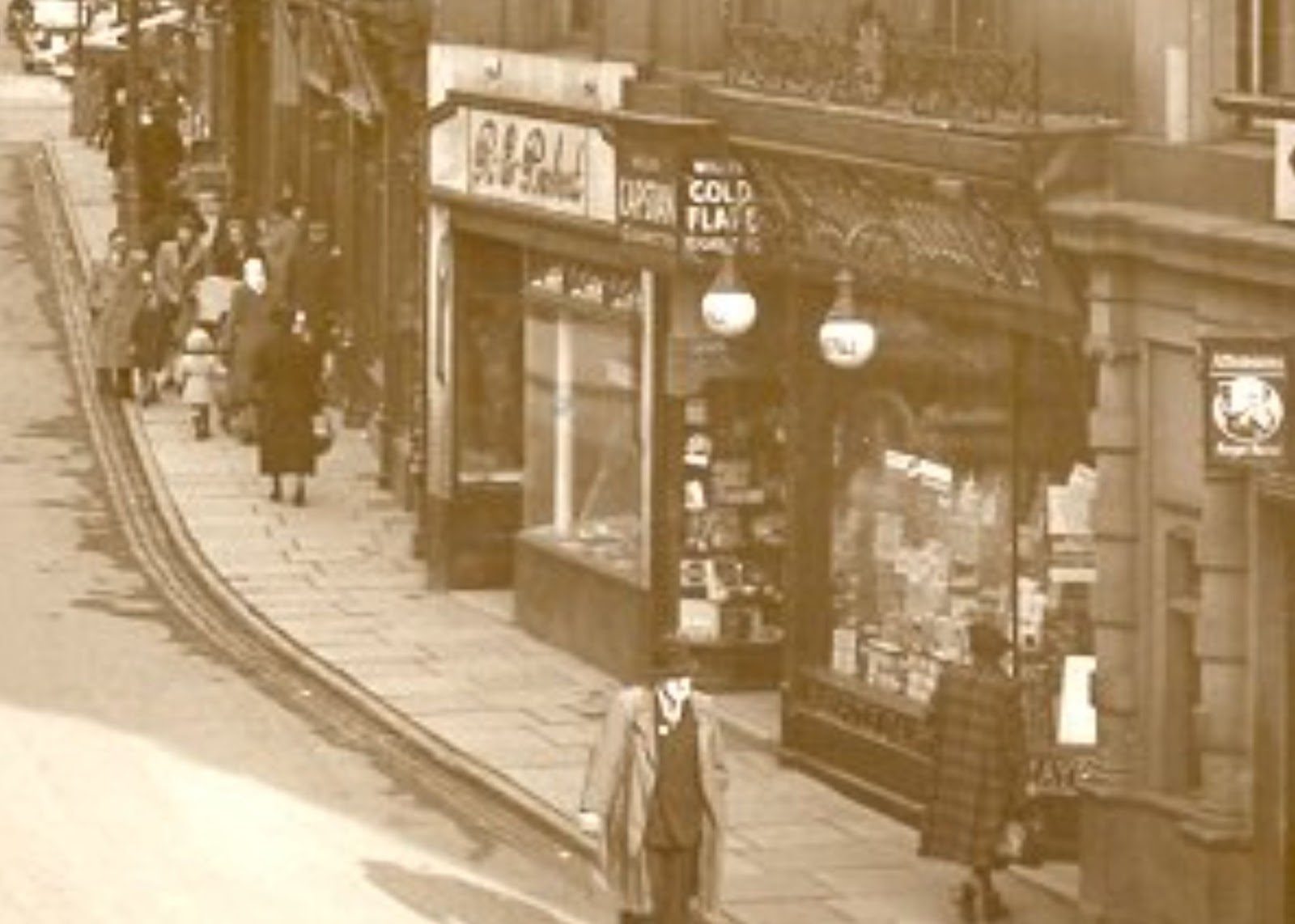
The 1930s came unnoticed, and with them came the Great Depression. Maypole was not spared. Suffice it to say that in 1934, the company’s profits fell significantly and now amounted to just over £300,000, which was 28% less than ten years later.
All of this led to the need to lay off staff, even in the so-called “rich” stores. It was necessary to dismiss dedicated employees who had been working for decades, who had been preparing shop windows until late at night, and who had spent Sundays doing accounting. Such people were also laid off and joined the more than three million other people who lost their jobs in the UK.
It is widely accepted that the success of Maypole Dairy Co. was due to its philosophy of accumulating a lot and selling it cheaply. In addition, the company concentrated on the essentials and selective location of its stores, which were often located in working-class neighbourhoods.
Sources: