

Birmingham Library, one of the largest in the UK, can accommodate 3,000 readers simultaneously and boasts the largest cultural space in Europe. Opened in 2013, this modern marvel ranks as the 10th most popular attraction in Birmingham, drawing over 2.5 million visitors in its first year. Valued at nearly £200 million, the library is a magnet for readers and tourists alike. Next on birmingham1.one.
Planning and Selection of Contractors
The Birmingham City Council spent years carefully planning the construction of the new library, aiming to create a world-class landmark. After extensive deliberations on location and budget allocation, Centenary Square was chosen as the site. The architectural firm Mecanoo was selected from among 100 competitors to bring this vision to life.
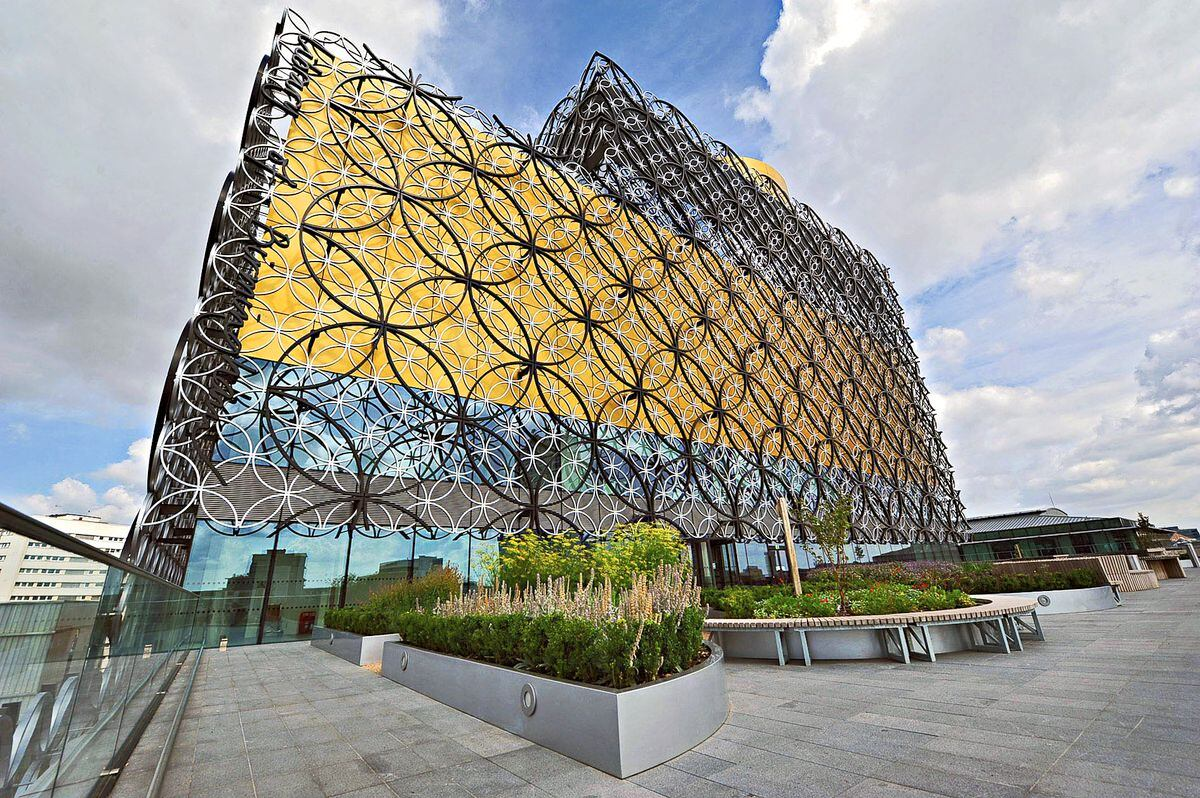
Mecanoo is renowned for designing exceptional, flexible spaces that integrate seamlessly with urban landscapes. Founder and creative director Francine Houben, celebrated for her library designs, personally led the project. For Houben, libraries are more than just book repositories; they are public cathedrals of the 21st century, as significant today as medieval churches were in their time.
The library’s sustainable design includes a cooling system powered by groundwater, reducing energy consumption and carbon emissions. The main construction material, reinforced concrete, ensures the structure’s durability, while an ornate metallic façade symbolizes Birmingham’s industrial heritage from the 19th and 20th centuries.
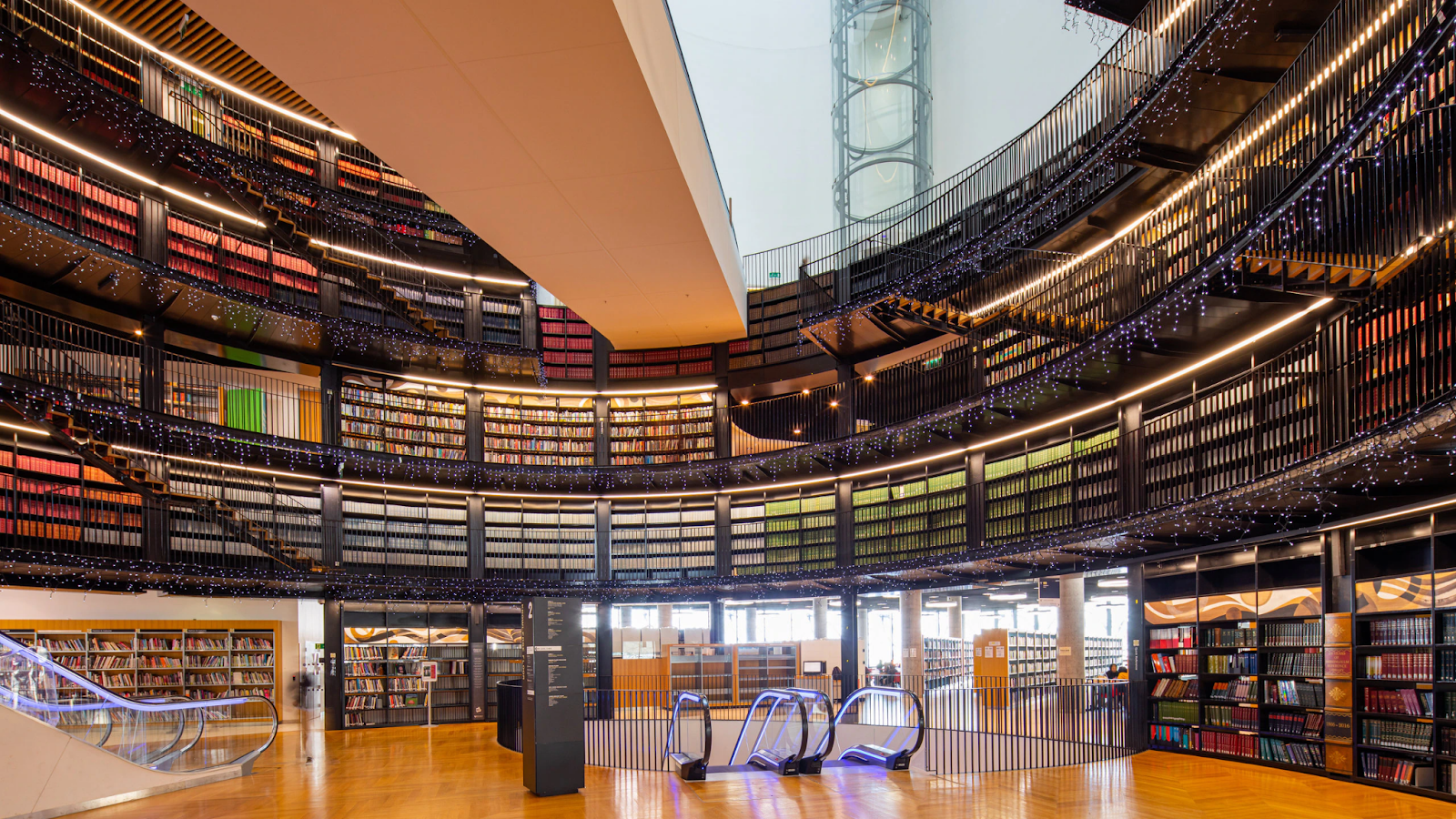
Spanning 10 levels, the library features four public spaces with terraces and gardens, as well as two archive levels housing the “Golden Box,” a repository for photographs and rare books. Modern exhibition areas provide open access to the library’s vast collections.
Special spaces such as The House and The Studio cater to conferences and meetings, while The Terrace offers stunning views and serves as a venue for social gatherings. For grand events like award ceremonies, fashion shows, and concerts, the Book Rotunda, a space lined with books from floor to ceiling, accommodates up to 300 guests for receptions or 180 for formal dining.
The library houses over 800,000 items, including books, journals, newspapers, maps, manuscripts, and photographs. Highlights include the Charles Parker Archive, a collection of children’s books, transport tickets, and photographs of Warwickshire by renowned photographers such as Benjamin Stone and Val Williams. The Boulton & Watt archive is another treasure, showcasing over 29,000 engine drawings and 20,000 letters documenting their groundbreaking work in steam engine development.
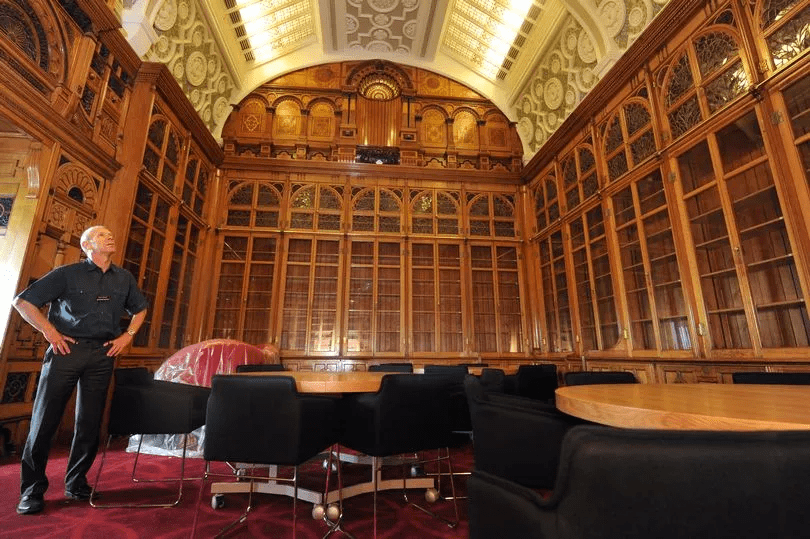
The Shakespeare Memorial Room, designed by John Chamberlain in 1882, is an Elizabethan-style space featuring intricate metalwork depicting birds, flowers, and leaves. Originally located in Birmingham’s Central Library, it was dismantled and reassembled in the new library in 2013. The room holds one of the world’s largest Shakespeare collections, including rare texts, early folios, and adaptations. With panoramic views of Birmingham, the room is a sought-after venue for weddings and celebrations, accommodating up to 60 guests for receptions or 20 for dining.
A New Library: Pros and Cons
The library, opened during an economic downturn in 2013, faced criticism for its cost amidst cuts to smaller libraries and public services. Between 2011 and 2012, over 340 public libraries closed across the UK. However, the majority of Birmingham residents welcomed the project as a source of civic pride. At its grand opening, Malala Yousafzai, the Nobel laureate who survived a Taliban assassination attempt, highlighted the transformative power of education, saying, “One book, one teacher can change the world.”
The library has won accolades such as Building of the Year from Architect’s Journal, recognition from the Royal Institute of British Architects, and a nomination for the Stirling Prize.
In 2014, the library introduced the Business and Intellectual Property Centre, offering free legal consultations for small businesses. Between 2015 and 2016, the library hosted the Digital Garage program, providing IT business training. In 2016, the Brasshouse Language Centre relocated to the library, joining its educational and cultural offerings.
Today, Birmingham Library is not just a repository of books but a center for learning, innovation, and community engagement, offering music halls, health centers, cafes, and relaxation zones. It remains the UK’s most popular library outside London.