

Birmingham Central Library is one of the most iconic landmarks in the city’s history, charting a journey from a Victorian municipal institution to a monumental symbol of Brutalism. Designed by architect John Madin and opened in 1974, it quickly became a vibrant cultural and educational hub and was once considered the largest public library in Europe. Despite acclaim from the architectural community and heated debate surrounding its appearance, the building was demolished in 2015, leaving an indelible mark on the city’s urban legacy. In this article on birmingham1.one, we look back at the history of Birmingham Central Library—its Victorian origins, Madin’s bold design choices, the reasons behind its demolition, and the vital role public libraries play in fostering literacy, education, and community life.
The History of Birmingham Central Library: From the Victorian Era to Brutalism
The story of Birmingham Central Library is actually the story of several buildings, each reflecting the spirit of its era and contemporary ideas about urban space, architecture, and knowledge. Long before the rise of the famous concrete complex, the library had already survived a devastating fire, a grand rebuilding, and decades of debate over what the city’s premier treasure trove of books should look like.
The first major step toward establishing a municipal library was taken in 1860. Following strong public support, the city purchased a plot of land from the Birmingham and Midland Institute just south of Edmund Street and west of Town Hall. It was right here that the story of the first Central Library began.
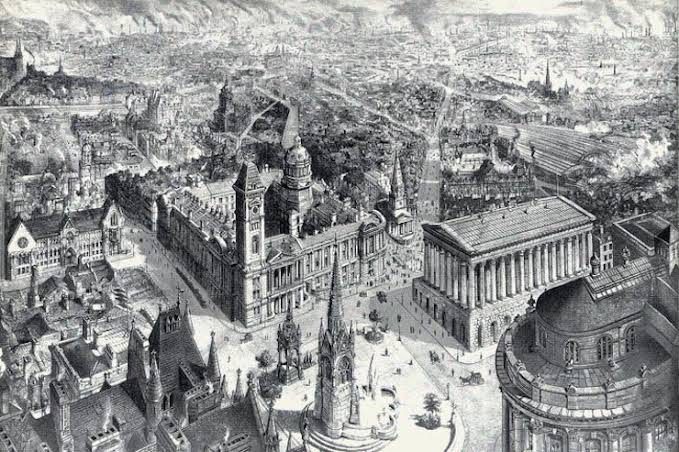
Its lifespan, however, proved short. In 1879, a catastrophic fire tore through the building. While it was a crushing cultural loss for Birmingham, the library’s journey did not end there. On 1 June 1882, a new building designed by J. H. Chamberlain in the Lombardic Renaissance style opened its doors. One of its standout features was a soaring, cavernous reading room. The construction cost £54,975—a hefty sum for the period.
At the turn of the 20th century, Birmingham expanded rapidly, and so did the library’s collections. Space for books and readers quickly ran short. By 1938, the city council was already voicing an urgent need for a new library, but the outbreak of World War II brought all development plans to an abrupt halt.
The issue resurfaced in the 1960s as Birmingham began overhauling its transit network and rolling out the Inner Ring Road scheme. The city needed a state-of-the-art library complex capable of keeping pace with a modern urban powerhouse. Planners chose a new site: the land previously occupied by Mason Science College and the Liberal Club.
John Madin’s Architecture: The Inverted Ziggurat and a Masterpiece of British Brutalism
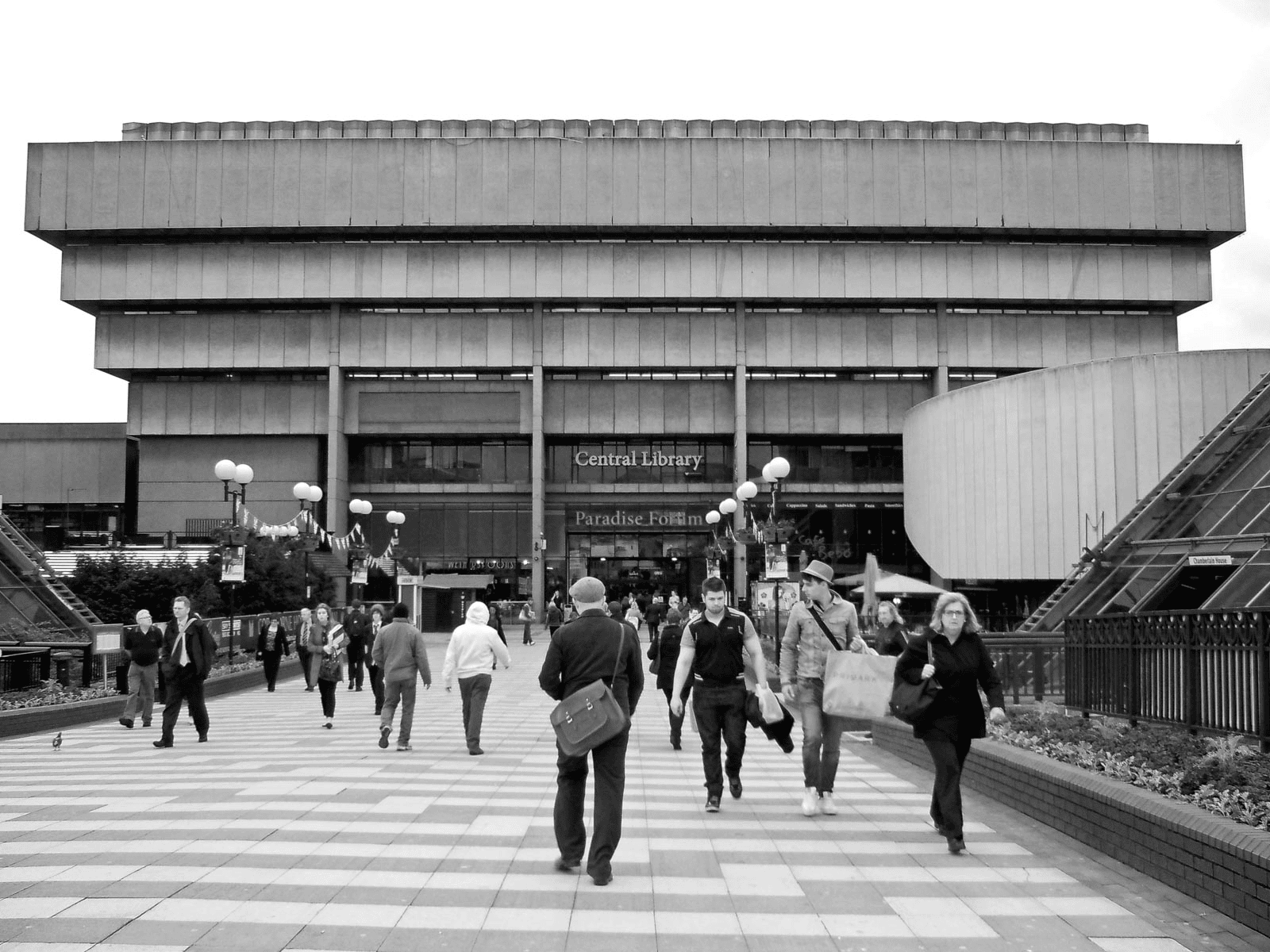
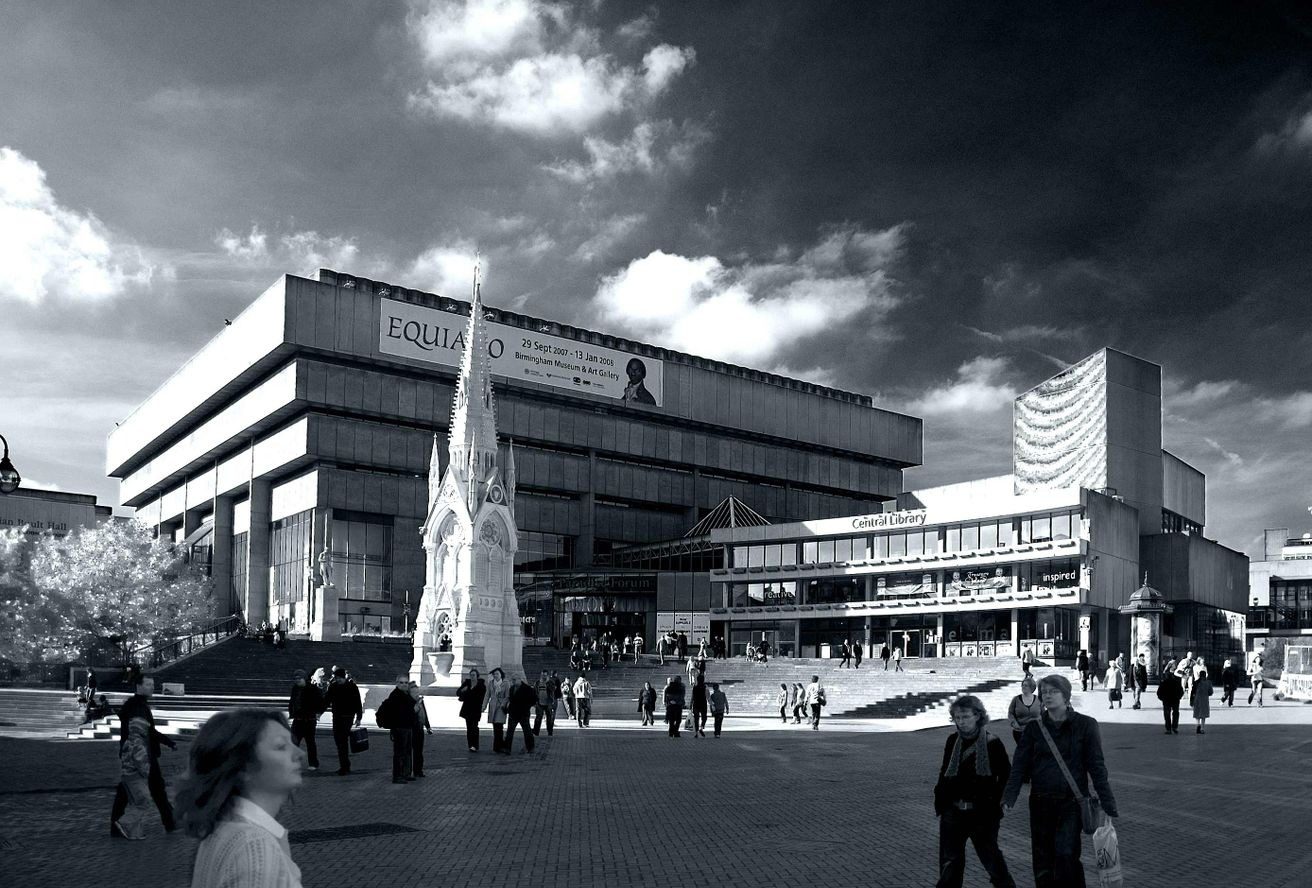
In January 1974, Birmingham Central Library officially opened its doors. Designed by local architect John Madin, it instantly became the city’s defining Brutalist landmark.
The library was a quintessential showcase of Modernist and Brutalist design, defined by an analytical focus on functionality, a rigorous and rational use of materials, and an absolute rejection of superficial ornament.
Central Library stunned visitors with its sheer monumental scale and daring geometry. Its visual signature was the sculptural silhouette of an inverted ziggurat. The building was characterised by raw exposed concrete, massive geometric forms, and narrow ribbon windows deliberately dwarfed by the expansive facade.
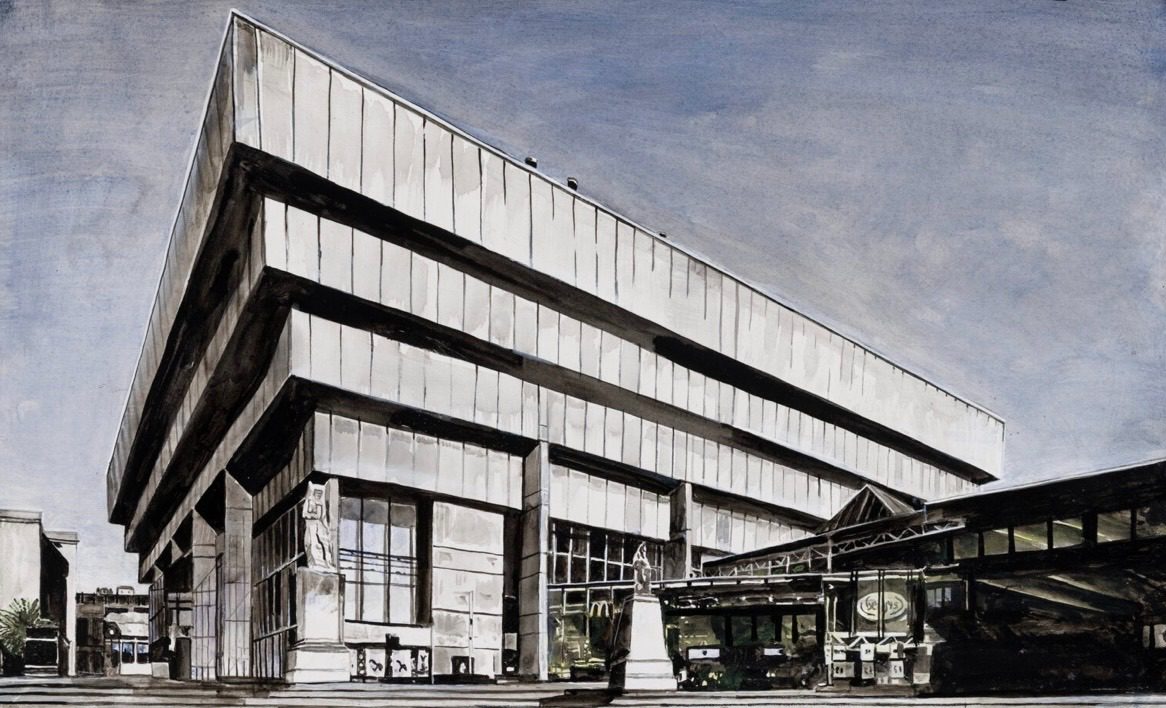
John Madin’s initial vision was breathtakingly ambitious: the library was meant to form the centerpiece of a grand civic and commercial complex spanning the new Inner Ring Road. However, economic downturns intervened, and major parts of the master plan were abandoned. To make matters worse, the city council slashed costs by substituting lower-grade building materials.
Despite these compromises, the building earned widespread acclaim as an icon of British Brutalism. English Heritage twice recommended the structure for statutory listed status. Yet both bids were thwarted by fierce opposition from Birmingham City Council.
The Shakespeare Memorial Room: A Lost Treasure of Victorian Birmingham
The story of the Shakespeare Memorial Room—a casualty of shifting architectural fashions—deserves special attention. Back in 1863, the local Shakespeare Club drew up plans for a dedicated collection designed to serve as an artistic monument to the immortal Bard.
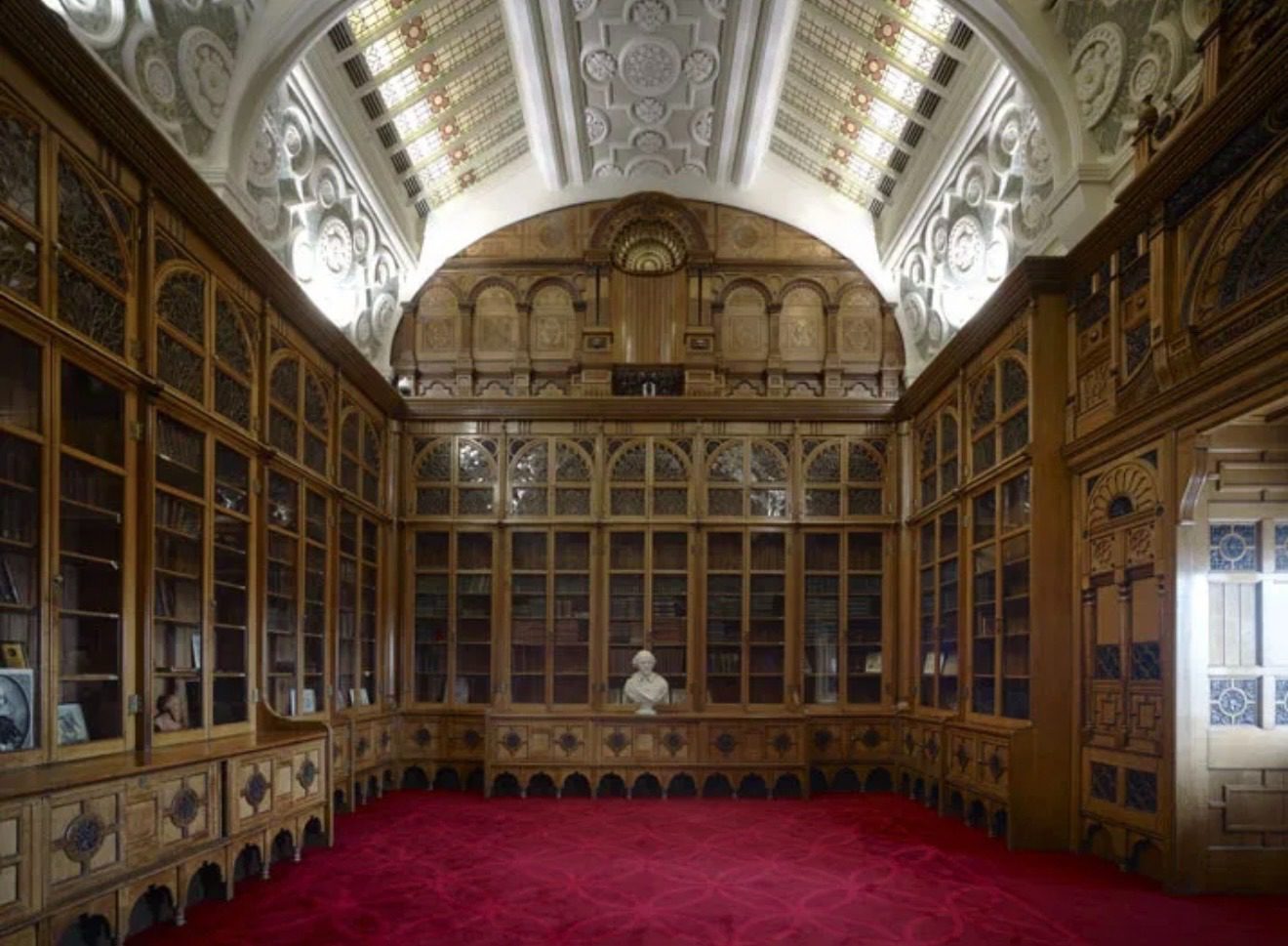
Architect John Henry Chamberlain approached the room as a work of art in its own right, outfitting it with carved oak woodwork, floral tiling, stained glass, and an ornate plaster ceiling.
Opened in 1878, it quickly became a haven for Shakespeare enthusiasts. Remarkably, the room survived the devastating 1879 fire and was rebuilt on an even grander scale. Its mission was to gather every known edition and translation of Shakespeare’s works, alongside every book written about his life.
Yet by the 1960s, as preparations for Madin’s concrete complex gained momentum, word spread that the ornate Victorian Shakespeare Room had no place in the new Brutalist vision.
The Birmingham Victorian Society campaigned vigorously against its destruction, arguing that future generations would cherish reminders of an era when the city led the nation in progressive municipal enterprise.
The local press stoked the flames. In 1971, the Birmingham Post ran a headline reading, “Anybody want 6 spiral staircases?”, urging readers to rehome salvageable Victorian features. Speculation swirled that the interior might be sold to American collectors or moved to the University of Birmingham. Following the opening of Madin’s library in 1974, the grand room was stripped of its original role, and the collection was integrated into a broader, more accessible community format.
More Than Books: Educational Lifeline and City Archives
Birmingham’s libraries do far more than lend books. They serve as essential infrastructure supporting literacy across the city. The numbers tell a striking story: 50% of Birmingham’s wards rank among the top 10% of areas in England with the most pressing need for literacy support.
Today, the city’s library services provide a broad array of vital public resources:
- Free access to books, reading groups, and materials in accessible formats.
- Digital connectivity (free Wi-Fi and computers), vital for those without home internet or anyone looking to build digital skills.
- Guidance and information on career pathways, personal finance, health, and social welfare benefits.
- Cultural events and creative experiences that foster personal growth and mental wellbeing.
- Lifelong learning programmes—ranging from early-years storytelling sessions to adult literacy classes.
In addition, the “Birmingham Collection” serves a vital research purpose. It brings together materials covering the demographic, economic, historical, and social development of the city. The collection caters to a diverse audience, from local history novices and students to academic researchers and council staff.
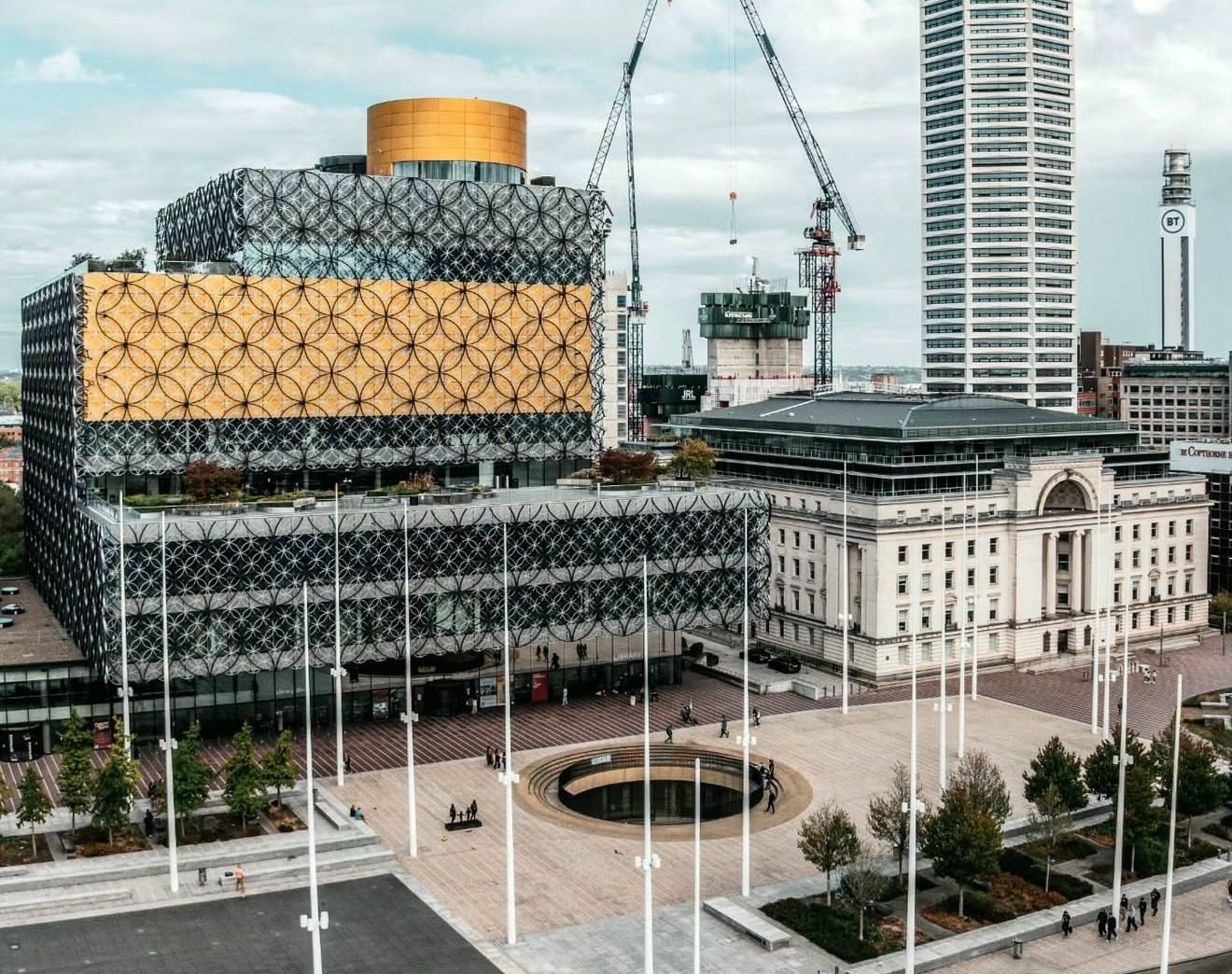
The contemporary Library of Birmingham also houses six designated collections recognised by Arts Council England, including the Birmingham City Council Archives, the Soho Archives, and the world-renowned Shakespeare Collection.
The Battle for Preservation and Demolition: The End of an Era
Despite its enduring value to residents, dark clouds gathered over Central Library. City leaders were determined to regenerate Birmingham’s city centre and attract major commercial development, making the Paradise Circus site central to their plans.
Researchers note that the council anticipated significant revenue from transferring development rights over the prime plot to private developers. Around the same time, proposals emerged to build an entirely new library elsewhere in the city.
The decision sparked widespread outcry from community groups and architectural conservationists:
- The Friends of Central Library group put forward an alternative master plan that would have preserved the library at the heart of the redeveloped Paradise Circus scheme.
- Campaigners argued that knocking down such a colossal building barely 40 years after its completion flew in the face of sustainable development principles, publishing open letters in the press demanding a moratorium on demolition.
- Historic England made repeated attempts to secure heritage protection for the building, but government officials turned a blind eye.
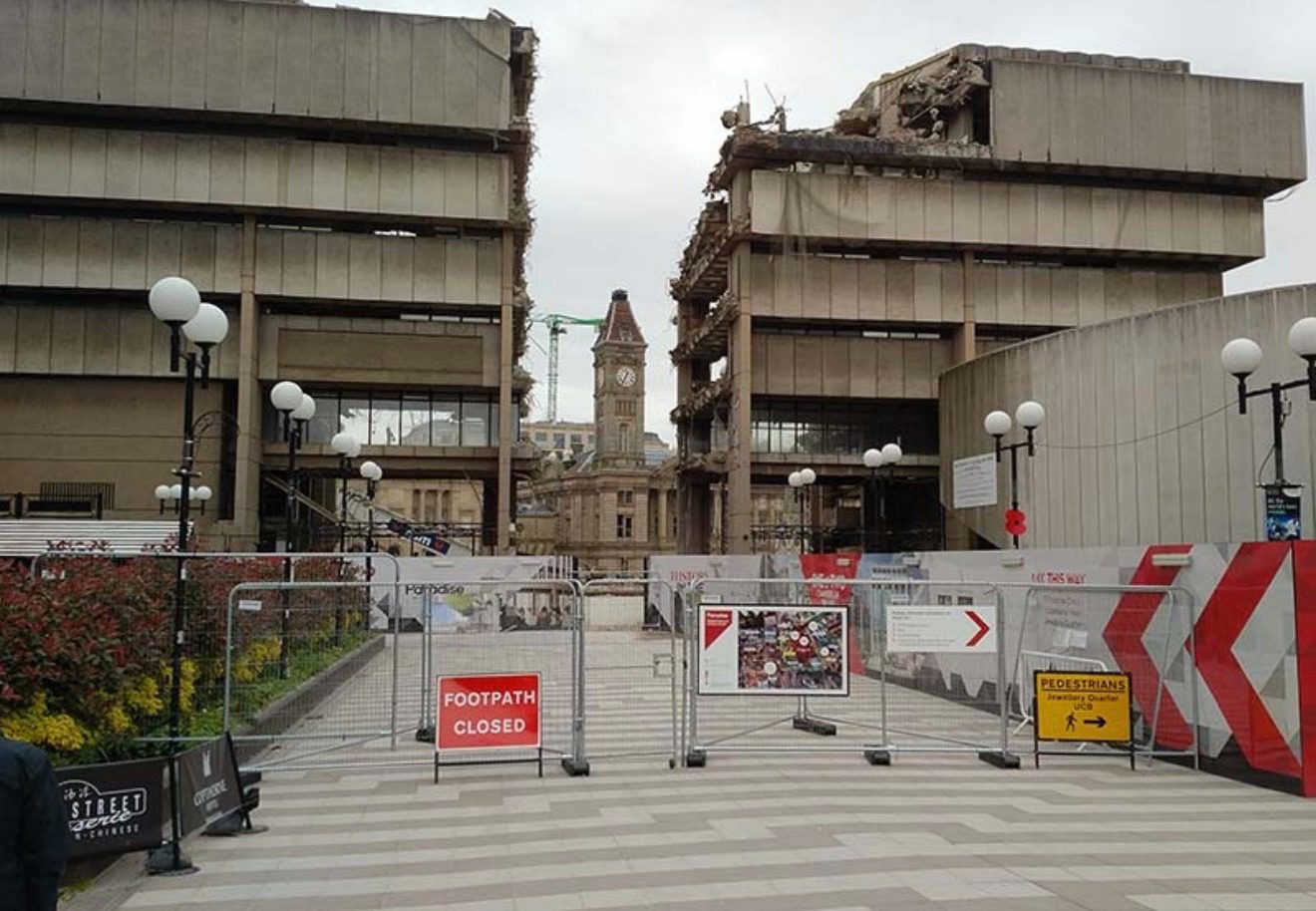
Birmingham City Council, the Birmingham Civic Society, and developer Argent presented a united front in favour of levelling Madin’s library. In the end, the fight to save the building was lost.
Central Library shut its doors for good on 29 June 2013. In late 2015, just ahead of Christmas, heavy machinery moved in to tear down the famous concrete ziggurat. Its demolition, completed in 2016, cemented its status as one of modern Britain’s greatest lost architectural landmarks.
The history of Birmingham Central Library is a story of bold architectural ambition, cultural shifts, and civic battles over heritage. John Madin’s building was never just a monolithic concrete ziggurat—it was an engine of learning for millions of residents, granting vital access to knowledge, technology, and irreplaceable civic archives. While this Brutalist titan was sacrificed for commercial redevelopment, the memory of Central Library remains deeply woven into Birmingham’s identity. Today, its educational mission lives on in the new Library of Birmingham, safeguarding priceless treasures and inspiring new generations of readers.