

Homeless individuals are still being prosecuted for begging in the West Midlands under a harsh and archaic 200-year-old law that was slated for repeal in 2022. The law in question is the Vagrancy Act of 1824, which was supposed to be abolished after the government passed an amendment to the Police, Crime, Sentencing and Courts Bill. For now, however, long-standing campaigns for its repeal continue. The 1824 Act, for example, prohibits sleeping rough and begging, criminalizing those who do so rather than focusing on supporting them with their problems. In 2020, the West Midlands Police initiated 13 legal proceedings under this act. Find out more at birmingham1.one.
“Beggar’s Bush”
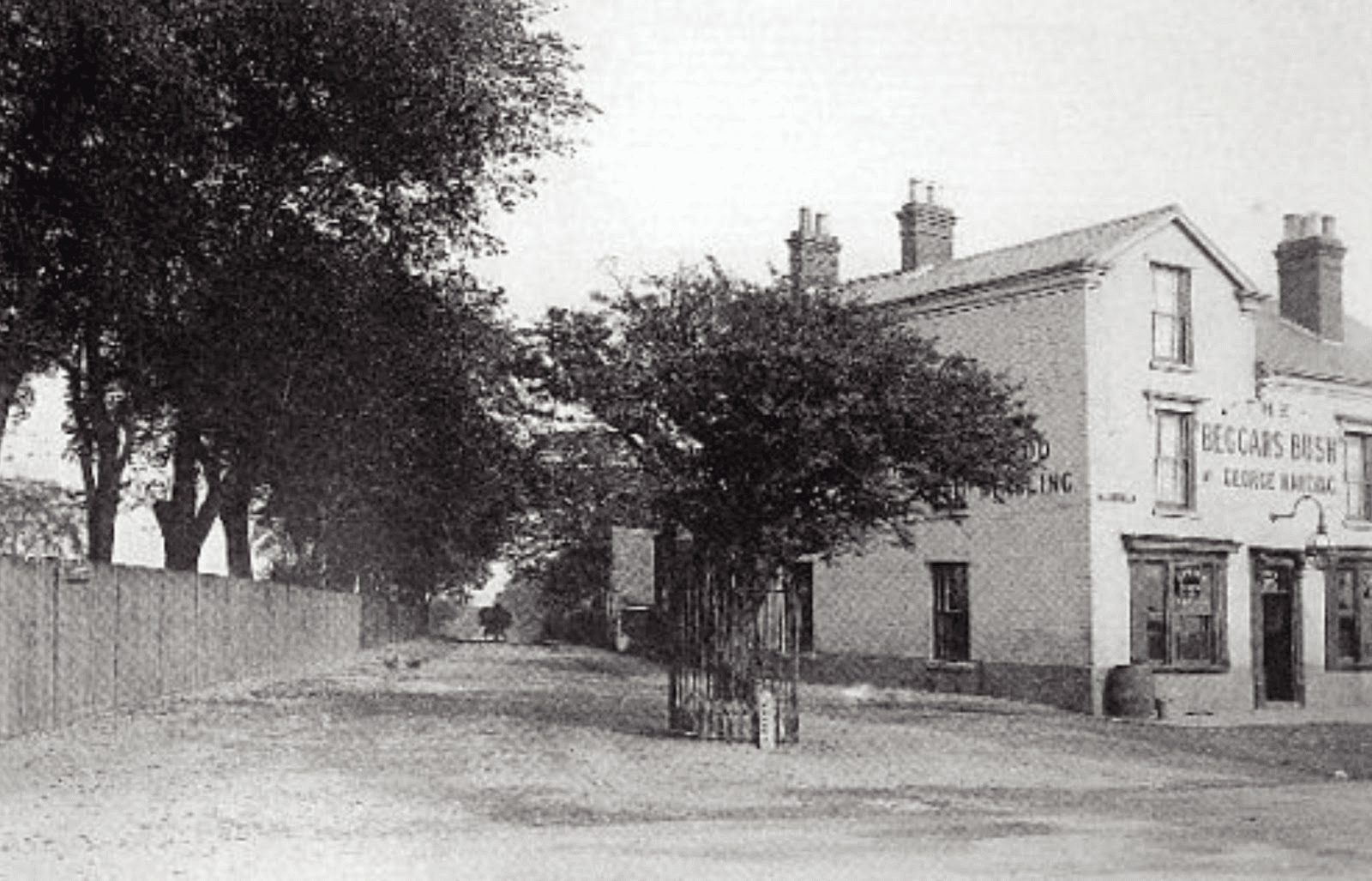
To conclude the topic of the Vagrancy Act of 1824, it should be noted that the Police, Crime, Sentencing and Courts Act was indeed passed in April 2022 and received Royal Assent. It contains a provision that repeals the 1824 Act, but it’s not that simple. The provision must be brought into force by the Secretary of State, and the government does not intend to initiate the repeal process until a suitable replacement law is enacted.
As we can see, the influence of history on the lives of modern-day beggars and homeless people in Birmingham is more than significant. Speaking of history, at the intersection of Jockey Road and Chester Road in New Oscott, a hawthorn bush once grew, marking the point where the parish boundaries of Sutton Coldfield, Aldridge, and Perry met. An 1890 Ordnance Survey map shows a public house named “The Bush” at this location.
An old tale recounts that an unknown beggar once gave up the ghost under this very bush. The responsibility for the burial costs lay with the parish where the person died. Since the bush stood at the boundary of three parishes, none would take responsibility for the burial, and so the poor soul was buried where he died, giving the location its name: “Beggar’s Bush.”
That old bush was removed during a local road expansion in the 1930s, but a weather-beaten hawthorn remained at the center of the intersection until it was replaced by traffic lights in the 1980s.
Despite this story happening long ago, “Beggar’s Bush” has remained a surprisingly common and popular name for such places, with at least 120 recorded instances, the earliest dating back to the 16th century. At that time, the term referred to destitute people who, through idleness, were forced to go to the “beggar’s bush for a new lodging.”
Later, the Elizabethan era saw numerous recessions and economic downturns, causing widespread unemployment and forcing many people to travel in search of work. During that time, certain laws were passed to at least try to distinguish between the truly poor, who were jobless and seeking work, and those who could work but chose not to. The latter, known as “sturdy beggars,” were, according to the same law, to be whipped and returned to their home parishes.
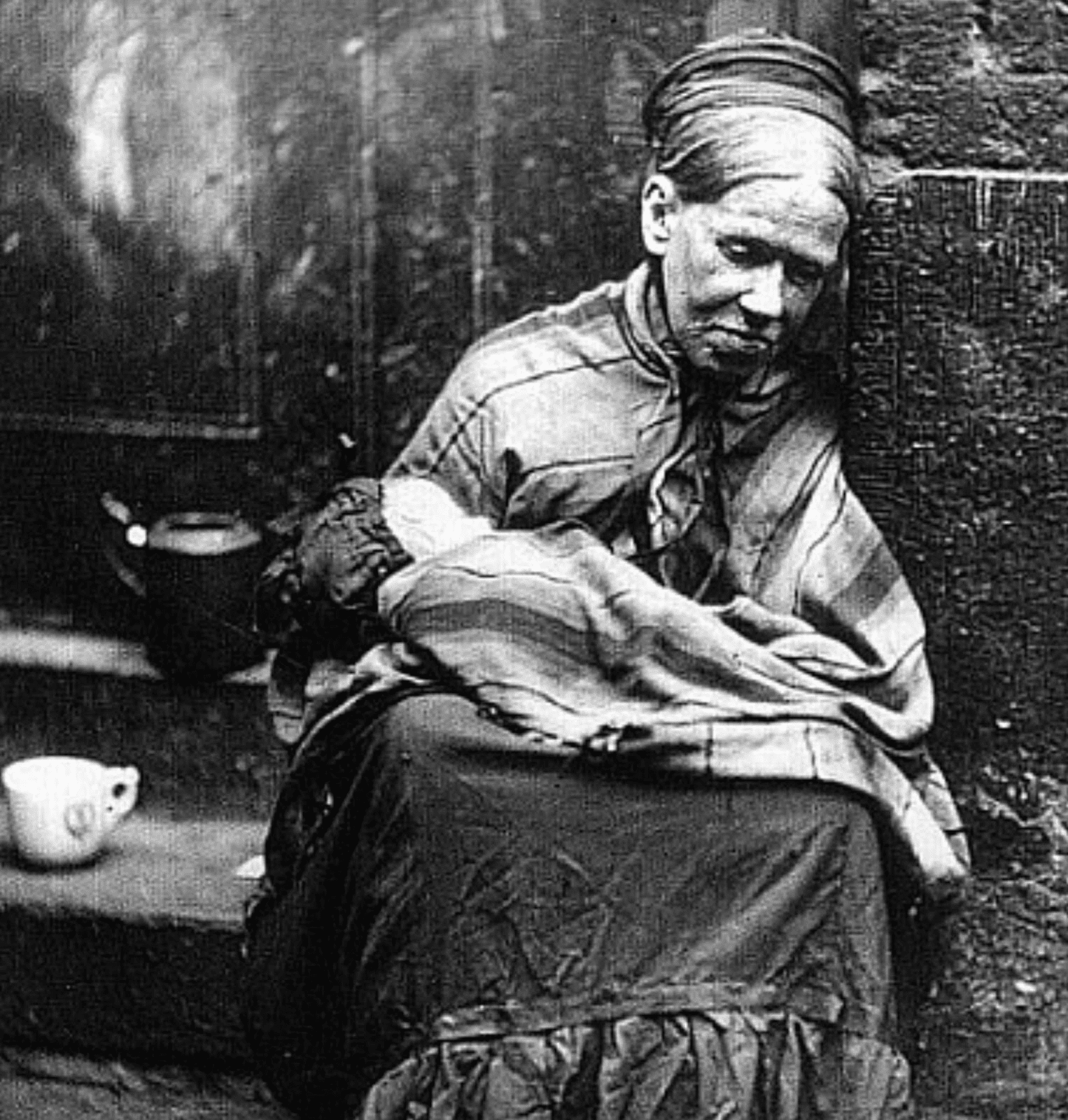
Enforcing these laws was the duty of each parish. However, if a beggar could find shelter outside a parish’s limits, they were beyond its jurisdiction. It is quite possible that these “beggars’ bushes” were strategically located on parish borders for this very reason. Here, the homeless could gather to ask for alms in a no-man’s-land, out of reach of the parish officers.
As for this particular “Beggar’s Bush,” there was a public house in the area in 1841. It was rebuilt in 1861, and the current “Beggar’s Bush” pub dates to the 1930s. Its location has always been advantageous—at the crossroads of one of the main routes from London to the northwest of England.
Aggressive Begging
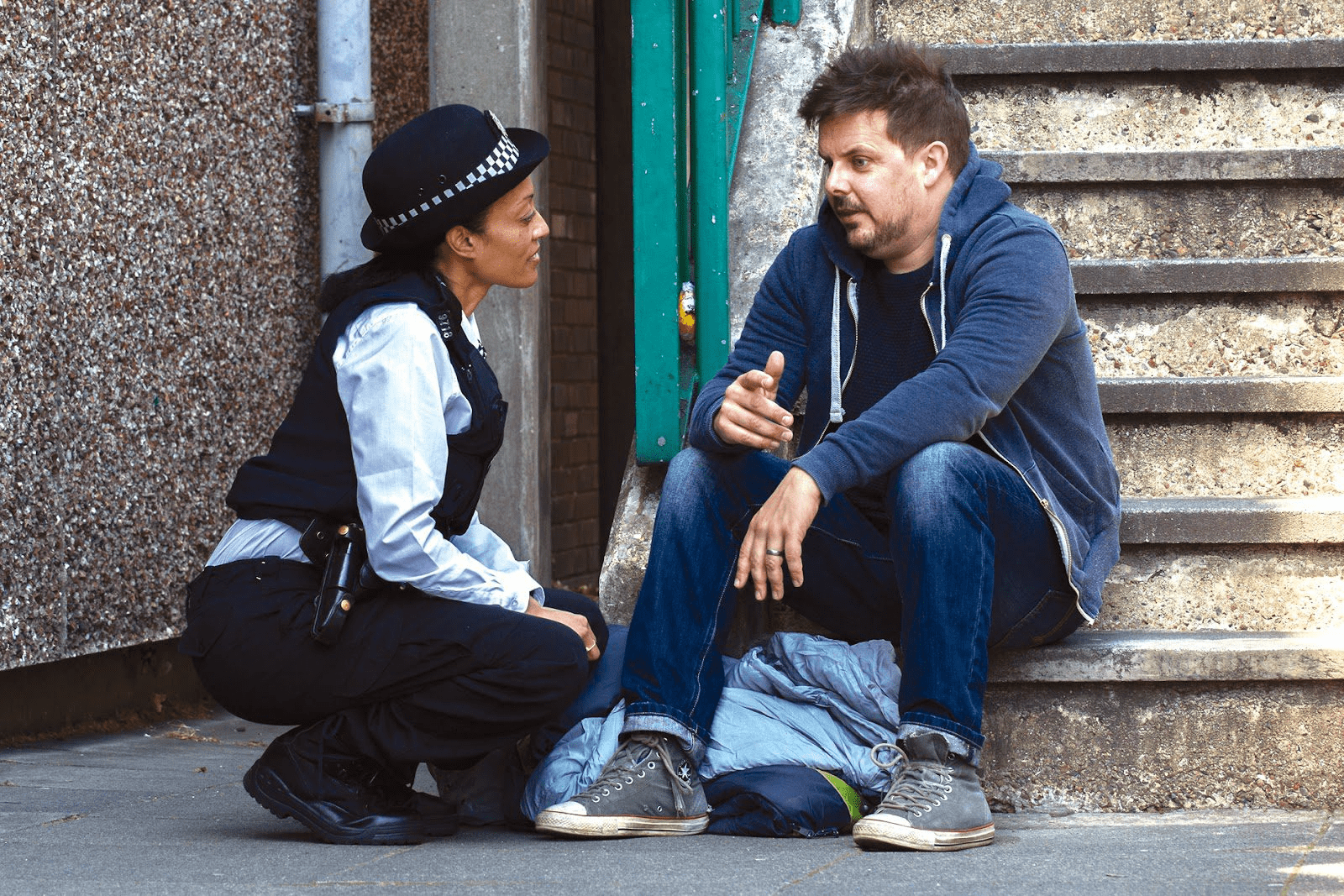
So, what is happening in Birmingham today? How are modern beggars faring in Great Britain’s second city? It turns out that begging in Birmingham is on the rise, with people increasingly targeting motorists caught in traffic jams or waiting at red lights.
These individuals persistently knock on car windows, and in the last six months of 2021, over 1,000 incidents involving aggressive beggars were registered in Birmingham. Motorists stuck in traffic become their targets, and what’s more, organized gangs continue to be dropped off from vans to harass these people. There have even been calls for authorities to take urgent action before the city becomes a “laughingstock” to the world.

The authorities have taken some measures. At the very least, a study was conducted which found, according to a committee report, that the number of reports of aggressive begging from April to October 2021 was 1,105. To understand the scale of the problem, there were 872 cases during the same period in 2020. Progress, as they say, is evident.
Members of the Birmingham City Council’s public safety committee stated that the offenders were part of organized gangs and expressed concerns about modern slavery. The report also mentioned that a Street Triage Partnership Group was created in October 2020 to combat begging. Consequently, issues of modern slavery and exploitation are being monitored, and work is being done with partners to identify victims and ensure they receive necessary support.
A Growing Problem

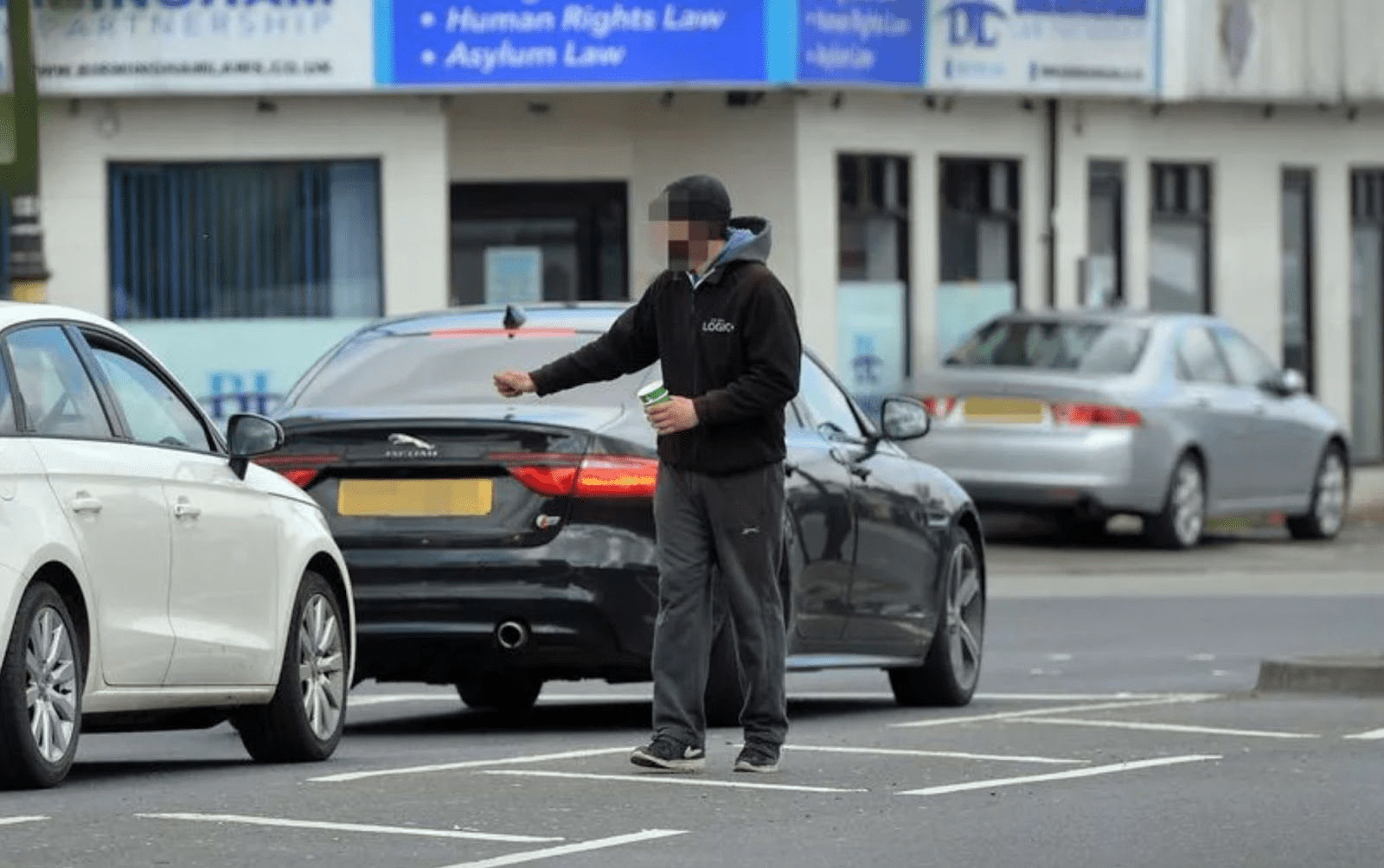
For now, the situation has not improved. By 2023, people begging on the streets have unfortunately become a very common sight in many UK cities. Furthermore, an alarmingly growing number of men and women are risking their lives by stepping into oncoming traffic to ask drivers for money. Many such individuals can be seen in the city center. They may be lone individuals, but sometimes, it seems that motorists are being approached by coordinated groups of beggars at traffic lights.
What follows is a traditional, somber spectacle: a beggar walks along the queue of cars waiting for the light to change, offering a smile or a word while holding out a paper cup to drivers in hopes of a reward. Some kind-hearted motorists offer food or drinks from their car windows; others give beggars cash, a commodity that is increasingly hard to find in today’s society of card and phone payments. But such charitable people still exist.
To Give or Not to Give? The Charity Perspective
Speaking of giving alms, especially cash, the homeless support service at the charity Trident Reach analyzed appeals made to them in 2021. The service’s staff discovered that, in their experience, so-called homeless beggars are often not homeless at all. They have housing and engage in begging as a way to make a living. Moreover, this applies to the majority of them, not just isolated cases.
For this reason, representatives of these organizations assure the public that there are better ways to help the genuinely homeless than by giving them money at a traffic light. Drivers are encouraged to donate to homeless support services online instead. They claim that the vast majority of people begging on the sidewalks or at traffic lights in every major British city, including Birmingham, have a place to go at night.