

During the Second World War, large numbers of women were recruited to work in factories and plants to meet the labour shortages caused by men being sent to the front. Many businesses in Birmingham retooled to produce war products. These included Cadbury’s, the British Small Arms Company and Austin Motors. Spitfire pistols were also manufactured at the Castle Bromwich factory. During the war, women worked at all of these enterprises.
Such work allowed women to earn money, but on the other hand, their working hours were quite long, which did not allow them to adequately manage their households, and they could not go to the store properly. Women even took days off on purpose to go shopping. Read about how and what they traded during the Second World War in Birmingham at birmingham1.one.
Where women earned money
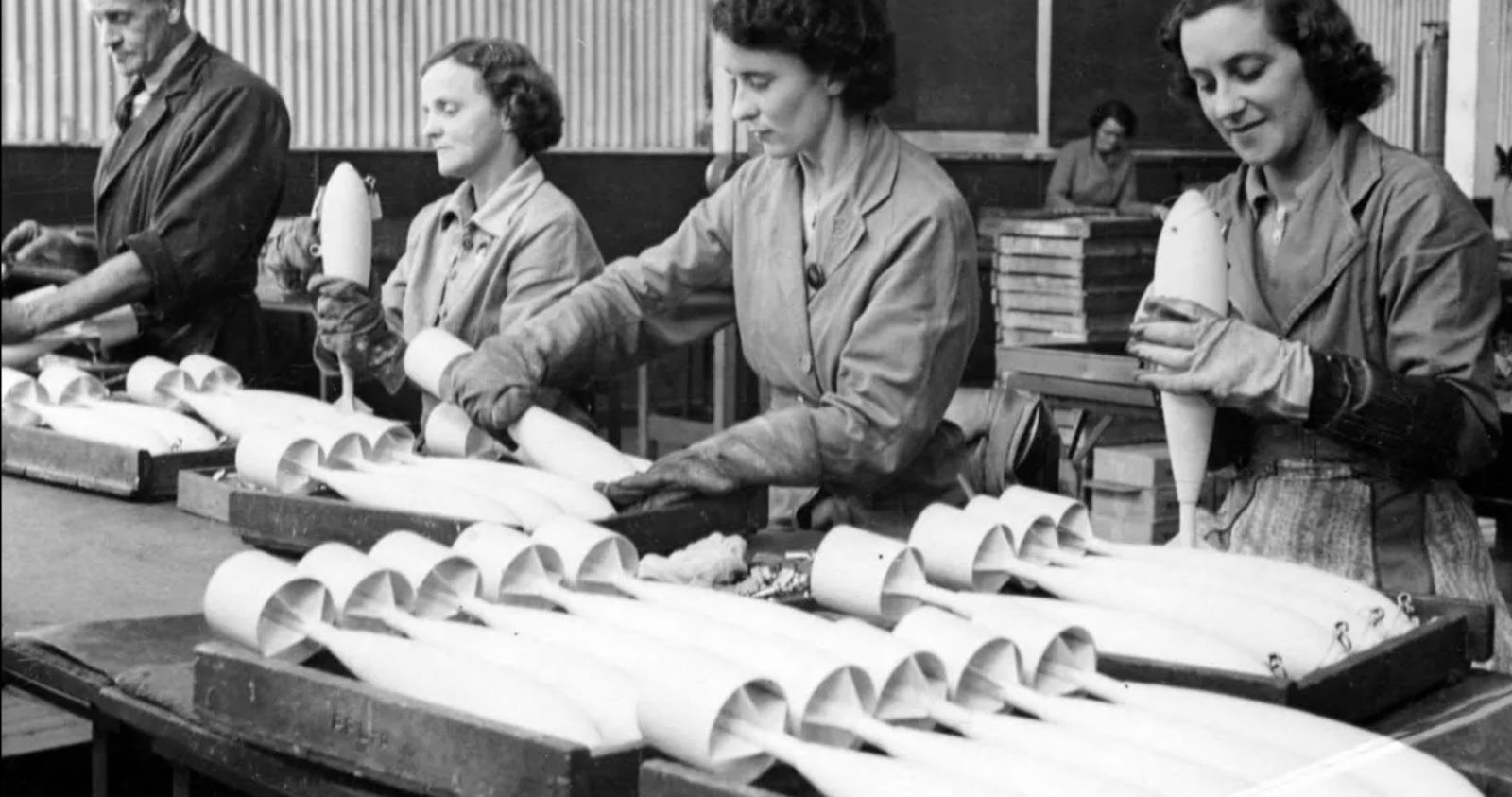
Many women worked during the war solely to earn money. This was especially true for those whose husbands were called up for service, as the allowances paid to military wives were not enough to support their families.
Despite the government’s efforts to provide social services, this did not change the fact that working hours were often long and the work was monotonous. Prior to the war, the 1937 Factory Law stated that women could not be employed for more than 48 hours a week and were not allowed to work night shifts. This law was relaxed at the beginning of the war, and women were allowed to work a maximum of 60 hours per week, as well as to work at night, on Sundays and in 7-day shifts.
It is logical that such a work schedule affected women’s home life and household management. After all, even if a woman worked full-time, she was still expected to manage the household and look after children.
How to get into the shop
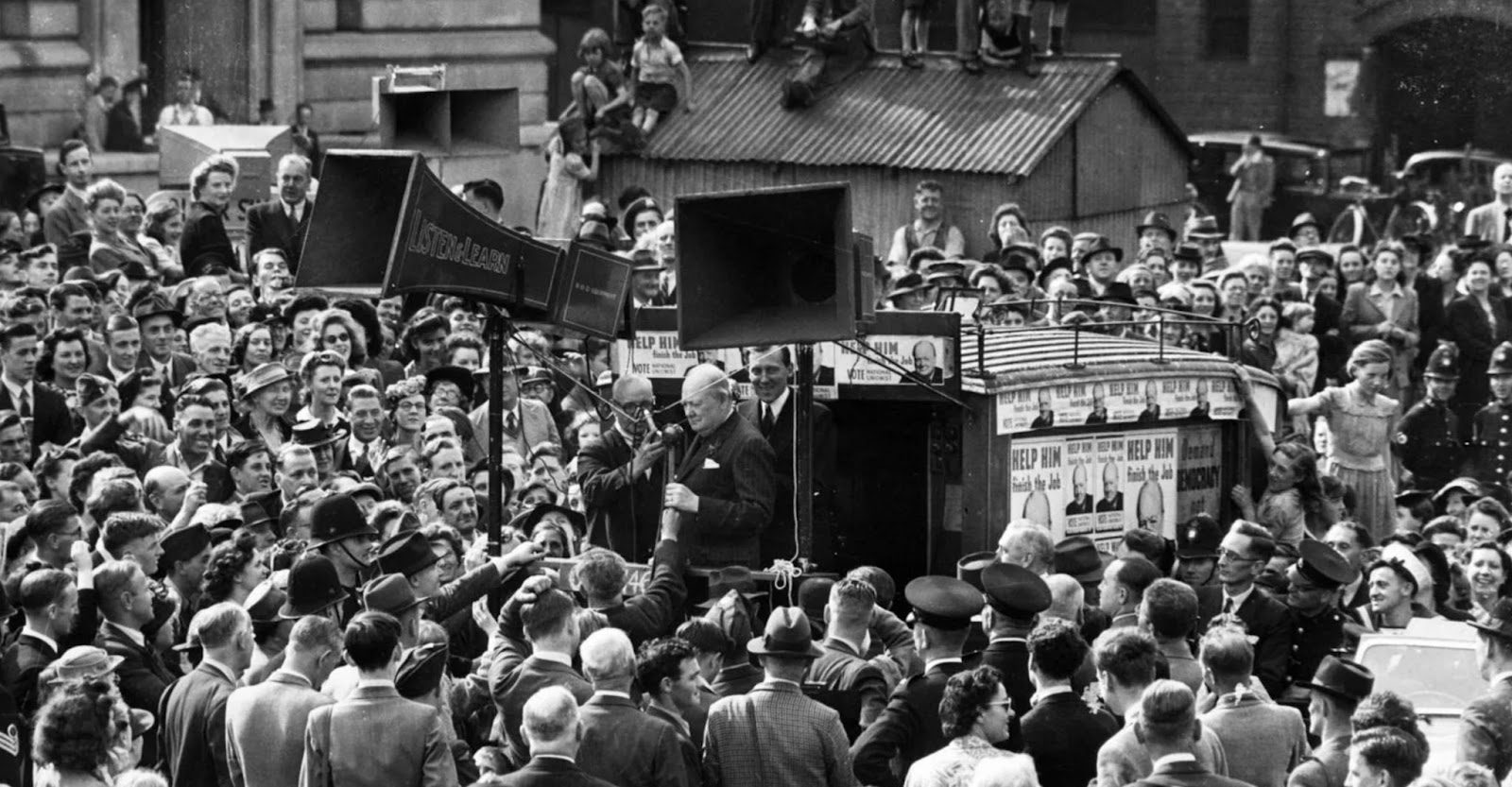
Women were very busy at work, so sometimes they took holidays because it was the only opportunity to go to the store and make purchases. Therefore, according to military statistics, the level of absenteeism among women was much higher than among men. Married women stood out in particular.
In other cases, the only time a woman had for household shopping was during her lunch break, which meant that she had no time to eat or rest after hard and monotonous work. Rest was especially necessary for those women who worked in heavy production. For example, many women worked at a brass foundry in Birmingham during the war. So shopping when a woman had to go out to find food for her family was a problem. And after work, she had to rush home to prepare dinner.
Some employers have developed shift and part-time schemes to try to reduce absenteeism. However, in reality, these schemes were not aimed at allowing women to take care of the household or to rest. Part-time work was offered only to those women who were exempt from military service or who had children under 14.
How much, what does it cost
Before the war, in the 1930s, £10, £50 and £100 notes were issued. But few people knew they existed, and even fewer saw them, because their purchasing power was enormous. A £5 note would be worth around £300 at today’s prices. Because of its simple design and high value, it was a target for counterfeiters, and the Germans devised a plan to paralyse the British economy. Their idea was to print counterfeit banknotes and flood the country with them. But this plan failed.
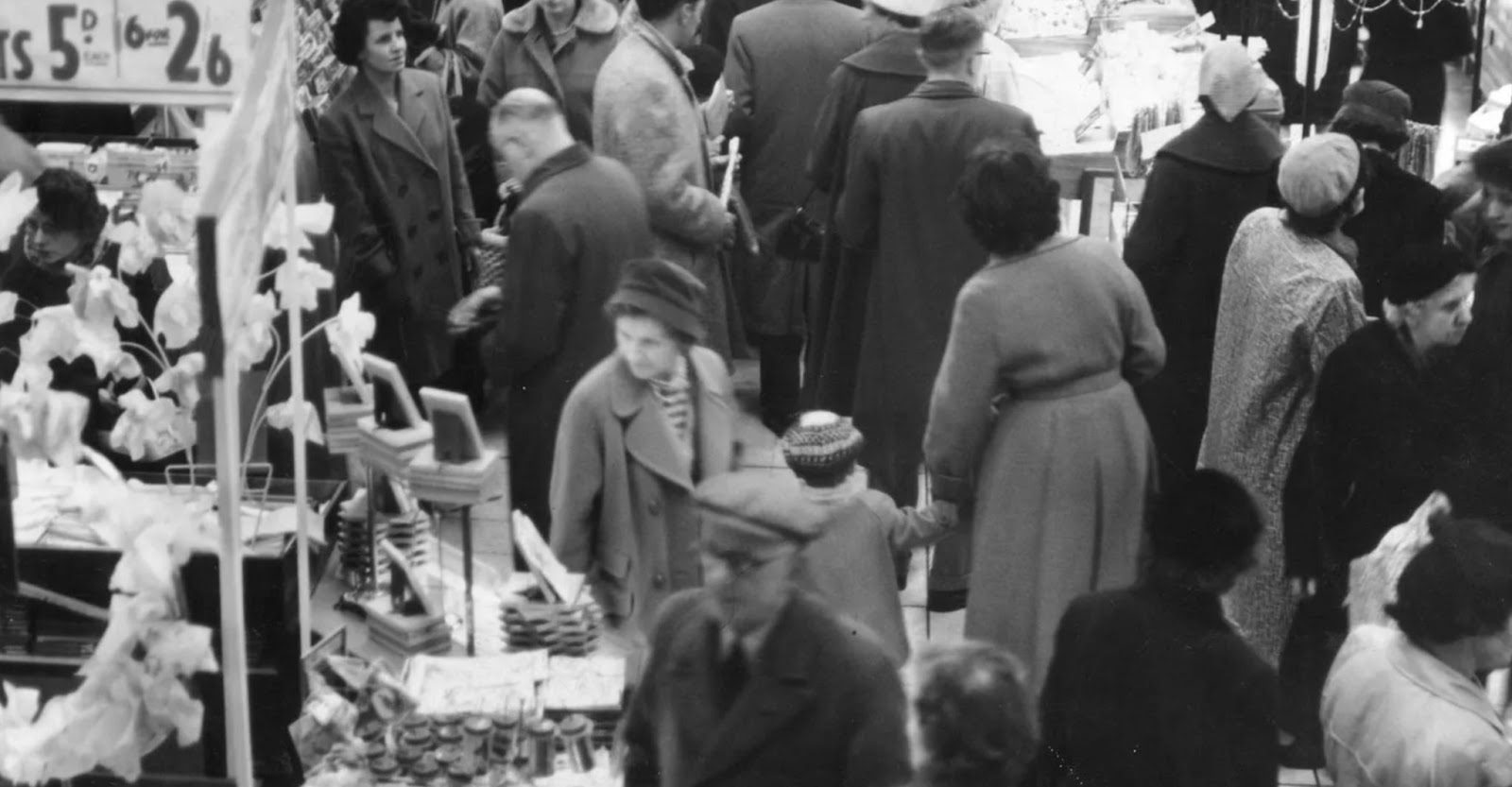
Against this background, a few words about prices in Birmingham during the Second World War. For example, an ordinary loaf of bread cost 4 old pence, which is less than two pence after the decimal point today. Buns could be bought for a farthing, which was a quarter of an old penny. A shilling was 12 pence, and a pound was 20 shillings. And the main thing is that one pound was a typical salary for a young man at that time.
It should be noted that in those days there were no supermarkets in the city, instead there were neighbourhoods of shops. They were all different. Often they were grocery stores, with bakery and butcher’s products. Th room with large stone slabs for cooling.Also, at the time, during the Nazi bombing of Birmingham, there were no electric cooling cabinets or refrigerators. So foods such as bacon, boiled meat, butter, cheese, and eggs were stored until needed in a cold room with large stone slabs for cooling.
The store’s counters were marble, so they would freeze over in the winter, being very cold. The concrete floors didn’t help keep them warm either, and many workers suffered frostbite on their feet because of the cold.
At that time, girls were not allowed to wear trousers, which would have kept them warmer while working in the shop. The only place where girls were allowed to wear trousers was in the Army. Heating was not allowed in any grocery store, except for the staff room, which usually had a small gas fireplace.
During the war, food was delivered to the stores in bulk and had to be packaged. Any dried fruit that we were lucky enough to get or pepper had to be weighed. Then it was all packed in paper envelopes. Jams and marmalades were delivered in large containers. Therefore, the sellers would wash the jars that were returned to them by customers, then pour the jam or marmalade into them with a spoon and weigh them, taking into account the weight of the jar. Another feature is that apples were added to all types of jam to make it last longer, as there were a lot of apples in the gardens.
In addition, stores sold boiled meat when it was available. Boiled ham, corned beef and cold cuts of veal were all sold in 7lb blocks, which had to be cut into thin slices by hand as there were no machines in those days. The cutting knives had to be kept very sharp to ensure a clean cut, as there was to be no waste.
Wartime trade rules
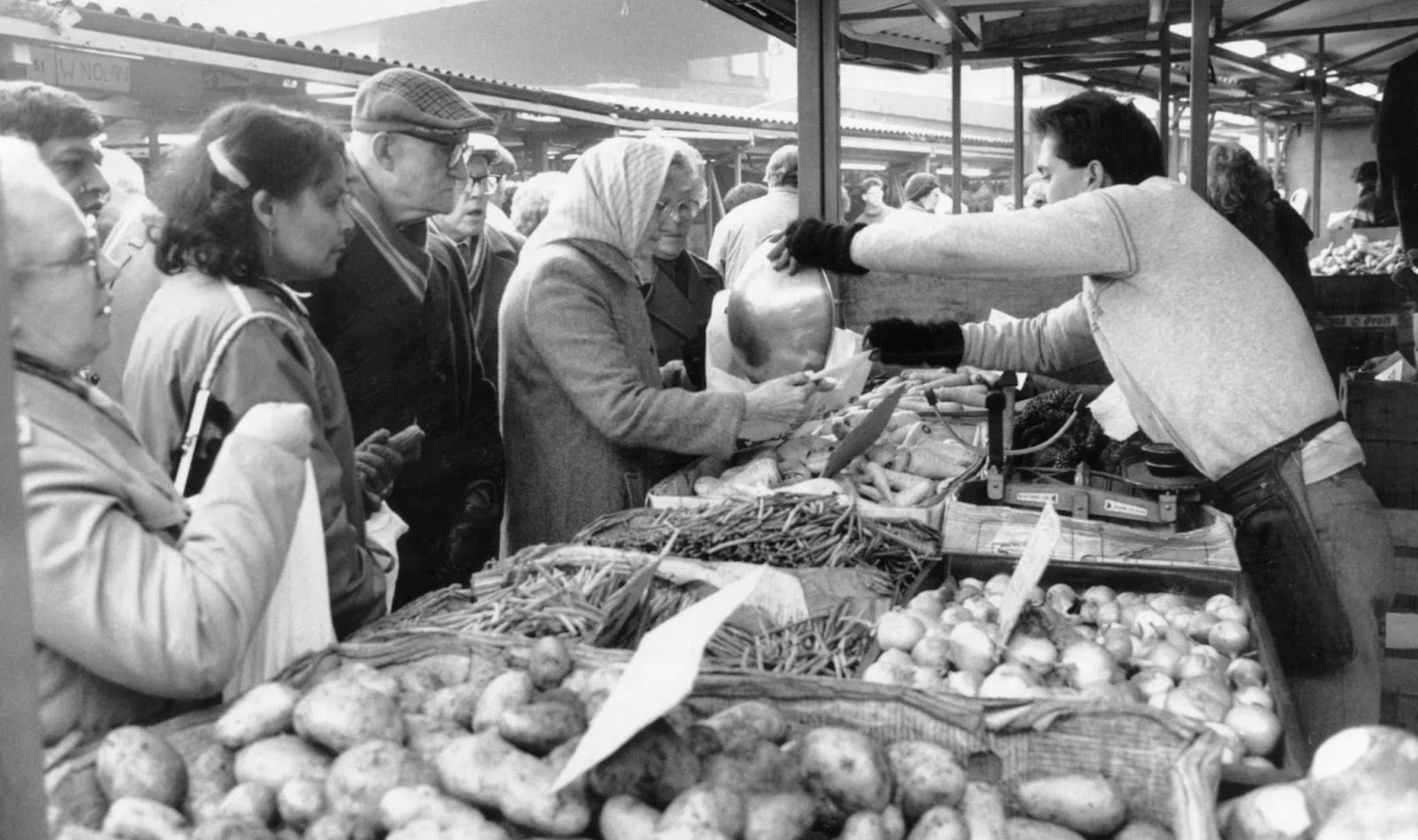
All foodstuffs were rationed, some by the government and some due to shortages. Everyone was given ration books with coupons for foods such as bacon
butter, margarine, lard, sugar, meat, and bread. Clothing was also rationed. The coupons indicated their purpose, and items could not be exchanged for anything else.
All the oranges and bananas that came to the shops were given only to children and pregnant women. Sweets and chocolates were rationed, but bread was not rationed for a long time, although later bread and flour were rationed.
In those days, no food was thrown away. All hotels, restaurants, and cafes had large containers where any food waste was thrown away. It was then taken to farms to be fed to pigs. Worse, any cakes that were left in the store and went stale were returned to the bakery the next day, chopped up and mixed. The mixture was then moistened and placed between two squares of dough, baked and sold as Nelson squares or, as they were commonly called, “doorstoppers”. The name comes from the fact that they were quite hard, but still sold well.
Джерела:
- https://www.bbc.co.uk/history/ww2peopleswar/stories/72/a2016172.shtml#:~:text=I%20worked%20for%20the%20CO,grocery%2C%20fresh%20fish%20and%20furniture.
- https://www.bgs.org.uk/resources/as-we-once-were-wartime-rationing
- https://www.ourwarwickshire.org.uk/content/article/bombs-in-birmingham-memories-of-the-second-world-war